
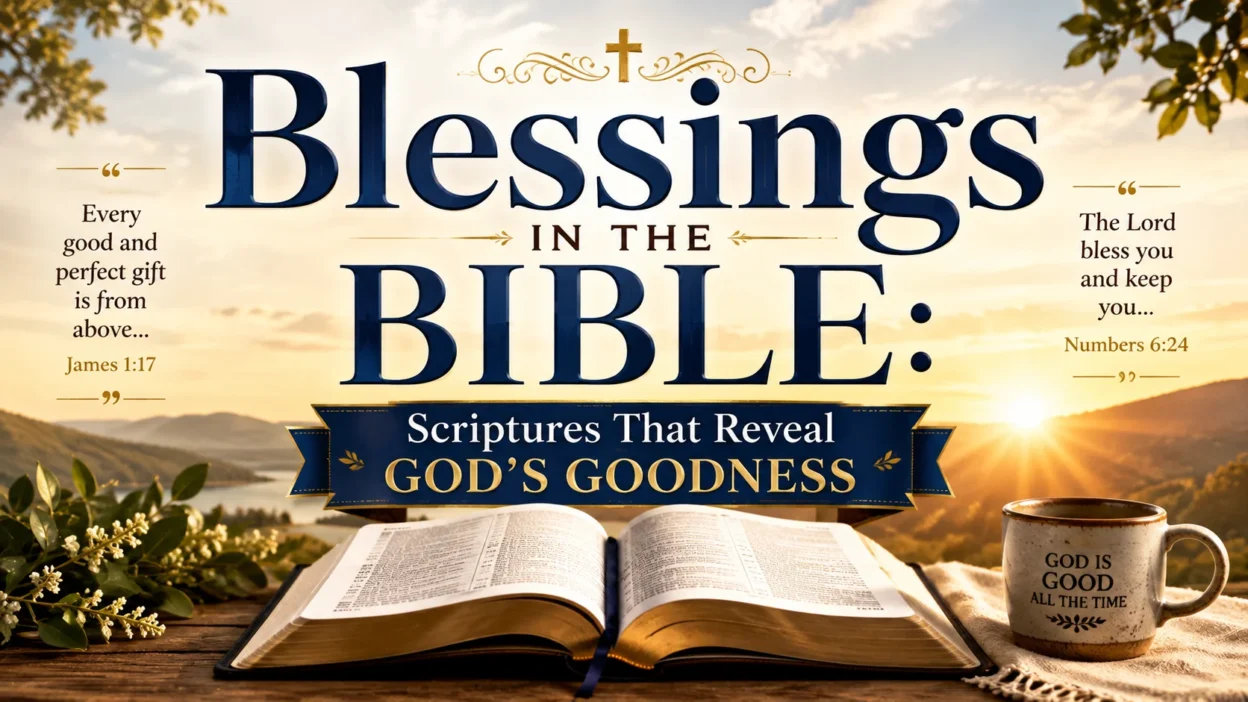
The Bible contains hundreds of passages about blessings, but Scripture gives blessing a much deeper meaning than money, success, or material comfort. God blesses people with His presence, peace, wisdom, forgiveness, protection, strength, purpose, and hope. The Bible also teaches people to become a blessing to others through love, generosity, mercy, and faithful living.
From the Priestly Blessing in Numbers 6 to the Beatitudes in Matthew 5, Scripture presents blessing in many different forms. Some passages describe God’s promises to His people, while others show how faith, obedience, humility, righteousness, and trust can shape a blessed life.
This guide explores the most important blessings in the Bible, explains what they mean, and provides biblical references you can study further. Whether you want Bible blessings for prayer, encouragement, family, difficult seasons, morning devotion, or personal study, these passages can help you understand what biblical blessing really means. 🌿
What Does Blessing Mean in the Bible? 📖
The Bible uses the idea of blessing in several different ways. Understanding this broader meaning helps us avoid reducing biblical blessing to financial prosperity.
- The Bible presents God as the ultimate source of blessing.
- Scripture often connects blessing with God’s favor and presence.
- A blessing can describe God’s goodness toward His people.
- The Bible connects blessing with peace and spiritual well-being.
- God can bless people with wisdom that helps them make better decisions.
- Scripture describes forgiveness as a profound blessing.
- God’s protection can also represent a blessing.
- Family, children, food, and daily provision appear as blessings in various passages.
- Spiritual blessings hold special importance in the New Testament.
- Jesus uses the word “blessed” in ways that challenge worldly ideas of success.
- The Bible does not teach that every faithful person will become wealthy.
- Scripture shows righteous people experiencing hardship and persecution.
- Biblical blessing often describes a person’s relationship with God.
- A blessed life can include faithfulness during difficult circumstances.
- The Bible ultimately points people toward God rather than possessions. 🙏
The Priestly Blessing in Numbers 6 🙏🌿
Numbers 6:24–26 contains one of the most recognizable blessings in Scripture. God instructed Moses to tell Aaron and his sons to bless the Israelites with words that emphasize God’s protection, grace, presence, and peace.
- God commanded Aaron and his sons to bless the people.
- The blessing begins by asking God to bless His people.
- The passage emphasizes God’s protective care.
- It asks God to shine His favor upon His people.
- The blessing connects God’s favor with grace.
- It asks God to turn His attention toward His people.
- The final request centers on peace.
- The passage places God’s name upon the Israelites.
- The blessing shows that God remains the source of true blessing.
- It presents blessing as a relationship between God and His people.
- Protection forms an important part of the blessing.
- Grace gives the blessing its message of divine favor.
- God’s presence gives the blessing lasting significance.
- Peace provides a beautiful conclusion.
- Christians and Jews have treasured this passage as a powerful biblical blessing. ✨
Key Scripture: Numbers 6:24–26.
Blessings of Obedience in Deuteronomy 🌾
Deuteronomy 28:1–14 describes blessings connected with Israel’s obedience to God’s covenant. The passage belongs to a specific historical and covenant context, so readers should study it alongside the rest of Deuteronomy.
- Moses connects obedience with covenant blessing.
- The passage describes blessings in the city.
- It also describes blessings in the countryside.
- The text mentions fruitfulness and agricultural provision.
- It includes blessings concerning families.
- It speaks about livestock and crops.
- The passage describes God’s protection from enemies.
- It connects blessing with Israel’s covenant relationship.
- The blessings extend beyond individual prosperity.
- The passage describes community-level well-being.
- Moses places obedience at the center of these covenant blessings.
- The passage also gives warnings about disobedience.
- Readers should not treat these promises as a universal formula for becoming wealthy.
- The passage reveals how seriously Israel’s covenant relationship shaped its understanding of blessing.
- Deuteronomy ultimately calls God’s people toward faithful obedience. 📖
Key Scripture: Deuteronomy 28:1–14.
Blessed Is the Person Who Trusts God 🌿
Several biblical passages connect blessing with trust in God. Psalm 1 and Jeremiah 17 provide especially strong examples.
- Psalm 1 describes the blessed person as someone who follows God’s instruction.
- The psalm contrasts righteous choices with destructive influences.
- It presents God’s instruction as a source of guidance.
- The blessed person continually reflects on God’s teaching.
- Psalm 1 compares that person to a tree planted near water.
- The tree produces fruit at the appropriate time.
- The image emphasizes stability and growth.
- Jeremiah 17 describes the person who trusts the Lord as blessed.
- Jeremiah compares that person to a tree near water.
- The imagery emphasizes resilience during difficult conditions.
- Trust allows people to remain spiritually rooted.
- Both passages connect blessing with dependence on God.
- Neither passage reduces blessing to financial success.
- Both passages emphasize character and spiritual stability.
- Scripture therefore presents trust as a foundation for a blessed life. 🌱
Key Scriptures: Psalm 1:1–3; Jeremiah 17:7–8.
Blessings of Wisdom in Proverbs 🕊️
The Book of Proverbs treats wisdom as one of life’s greatest treasures. It repeatedly shows how wise choices can protect people and improve their relationships.
- Proverbs presents wisdom as more valuable than silver and gold.
- The book encourages people to seek understanding.
- Wisdom helps people recognize destructive paths.
- Wise decisions can protect a person’s future.
- Proverbs connects humility with honor.
- The fear of the Lord forms a central theme in biblical wisdom.
- Proverbs encourages people to trust God rather than depend entirely on themselves.
- Wisdom can influence financial decisions.
- Wisdom can improve relationships.
- Wisdom can help people control their words.
- Proverbs warns against pride.
- The book encourages generosity toward others.
- Wisdom produces practical benefits without becoming a promise of effortless success.
- Scripture treats wisdom as a blessing because it shapes character.
- A wise life ultimately reflects reverence for God. 📚
Key Scriptures: Proverbs 3:5–8; Proverbs 8:32–35.
Blessings Found Throughout the Psalms 🎶🙏
The Psalms provide some of the Bible’s most comforting language about blessing, protection, forgiveness, gratitude, and God’s presence.
- Psalm 1 describes the blessing of following God’s instruction.
- Psalm 23 portrays God as a caring shepherd.
- Psalm 32 celebrates the blessing of forgiveness.
- Psalm 34 invites people to experience God’s goodness.
- Psalm 40 emphasizes trust in God.
- Psalm 84 celebrates those who dwell in God’s presence.
- Psalm 91 focuses heavily on God’s protective care.
- Psalm 112 describes blessings associated with reverence for God.
- Psalm 115 speaks about God’s blessing upon His people.
- Psalm 121 emphasizes God’s watchful care.
- Psalm 128 describes blessing for those who fear the Lord.
- The Psalms connect blessing with worship.
- They also connect blessing with trust during hardship.
- Many psalms acknowledge suffering instead of ignoring it.
- Together, these passages show that biblical blessing includes God’s presence during every season. 🌿
The Blessings of the Beatitudes ✨
Jesus begins the Sermon on the Mount with the Beatitudes in Matthew 5:3–12. These teachings redefine what many people might consider a blessed life.
- He speaks about those who mourn.
- He calls the meek blessed.
- He includes those who hunger and thirst for righteousness.
- Jesus highlights the merciful.
- He calls the pure in heart blessed.
- He identifies peacemakers as blessed.
- He includes people who face persecution for righteousness.
- He even speaks about blessing when people insult or persecute His followers.
- The Beatitudes challenge worldly definitions of success.
- Jesus focuses on spiritual character rather than social status.
- He connects blessing with God’s kingdom.
- Several Beatitudes point toward future reward.
- The teachings show that hardship does not automatically remove God’s blessing.
- Jesus presents blessing as a kingdom reality that often differs from worldly expectations. ✝️
Key Scripture: Matthew 5:3–12.
Blessings of God’s Protection 🛡️
The Bible frequently describes God as a refuge, shepherd, protector, and source of strength. However, Scripture does not promise that faithful people will never face danger or hardship.
- Psalm 23 presents God as a shepherd.
- Psalm 27 describes confidence in God’s protection.
- Psalm 46 calls God a refuge and strength.
- Psalm 91 emphasizes God’s protective care.
- Psalm 121 describes God watching over His people.
- Isaiah 41:10 encourages God’s people not to fear.
- God promises His presence during difficult situations.
- Scripture encourages believers to seek God when they feel afraid.
- Biblical protection can involve physical deliverance.
- It can also involve spiritual strength.
- God’s presence can give courage when circumstances remain uncertain.
- Daniel’s story demonstrates faith during danger.
- Many psalms move from fear toward trust.
- Biblical protection does not eliminate every difficult experience.
- It reminds believers that God remains present even during trouble. 🙏
Blessings of Peace in Scripture 🕊️
The Bible repeatedly presents peace as a valuable blessing. Biblical peace involves more than simply having a quiet or trouble-free life.
- Numbers 6 ends the Priestly Blessing with peace.
- Psalm 4 describes confidence in God’s care.
- Isaiah connects peace with trust in God.
- Jesus speaks about peace in John 14.
- Jesus offers His followers a different kind of peace.
- Philippians 4 connects prayer with God’s peace.
- Paul encourages believers to bring their concerns to God.
- Scripture encourages people to pursue peace with others.
- Biblical peace can involve inner stability.
- Peace can also describe healthy relationships.
- God’s presence can comfort people during uncertainty.
- Peace does not require people to deny their problems.
- Prayer allows believers to bring genuine fears before God.
- Gratitude can accompany peaceful prayer.
- Scripture encourages believers to let God’s peace shape their hearts. 🌿
Key Scriptures: Numbers 6:24–26; John 14:27; Philippians 4:6–7.
Blessings of God’s Presence ❤️
The Bible repeatedly shows that God’s presence can mean more than any material blessing.
- God promised to remain with His people.
- Moses valued God’s presence more than simply reaching the Promised Land.
- God encouraged Joshua with the promise of His presence.
- Psalm 23 portrays God as a shepherd who stays near.
- Psalm 46 presents God as a refuge.
- Isaiah encourages people to remember God’s presence during fear.
- Matthew 1:23 connects Jesus with the name Immanuel, meaning “God with us.”
- Jesus promises His disciples His continuing presence in Matthew 28.
- The Holy Spirit represents God’s presence with believers in the New Testament.
- God’s presence can provide courage.
- His presence can provide comfort.
- His presence can strengthen people during suffering.
- His presence can guide people through uncertainty.
- Scripture therefore treats God’s presence as one of the greatest blessings available to His people. 🙏
Key Scriptures: Exodus 33:14–15; Joshua 1:9; Matthew 1:23; Matthew 28:20.
Blessings of Forgiveness and Mercy 🌸
The Bible describes forgiveness as a profound blessing because it restores a person’s relationship with God.
- Psalm 32 celebrates the blessing of forgiven sin.
- David describes relief after receiving forgiveness.
- The Psalms repeatedly praise God’s mercy.
- Jesus teaches His followers to forgive others.
- The Lord’s Prayer includes forgiveness.
- Jesus connects mercy with blessing in Matthew 5.
- The New Testament emphasizes forgiveness through Christ.
- Scripture encourages believers to confess their sins.
- God’s mercy does not depend on human perfection.
- Forgiveness can free people from guilt.
- Mercy should influence how believers treat other people.
- Christians receive a call to forgive because God forgives.
- Forgiveness can restore broken relationships when people genuinely repent.
- Biblical mercy reflects God’s character.
- Scripture therefore treats forgiveness as one of God’s most meaningful blessings. 🕊️
Key Scriptures: Psalm 32:1–2; Matthew 5:7; Matthew 6:12; Ephesians 4:32.
Blessings of Faith and Trust 🙌
Faith forms a central part of biblical blessing. Scripture repeatedly encourages people to trust God even when they cannot see the complete outcome.
- Abraham provides one of the Bible’s strongest examples of faith.
- God called Abraham to leave his homeland.
- Abraham trusted God’s promise concerning his future.
- Romans 4 later connects Abraham’s story with faith.
- Hebrews 11 highlights many people who trusted God.
- Faith can produce courage.
- Faith can lead people toward obedience.
- Faith can strengthen perseverance.
- Jesus repeatedly encouraged people to believe.
- Biblical faith does not require people to understand everything.
- Faith can coexist with uncertainty.
- Scripture recognizes that believers can struggle while still trusting God.
- Trust shifts attention from circumstances toward God’s character.
- Faith can sustain people during difficult seasons.
- The Bible ultimately points believers toward trusting God’s promises. 🌿
Key Scriptures: Genesis 12:1–3; Romans 4; Hebrews 11.
Blessings of God’s Provision 🌾
The Bible describes God as a provider while also teaching people to practice responsibility, generosity, and contentment.
- Psalm 23 portrays God as a shepherd who provides.
- Jesus teaches His followers to pray for daily bread.
- Matthew 6 encourages people to trust God’s care.
- Scripture warns against allowing wealth to control the heart.
- Proverbs encourages diligence and wise stewardship.
- The Bible praises generosity.
- God provides physical necessities.
- God can also provide wisdom and strength.
- Biblical provision does not guarantee luxury.
- Jesus warns against greed.
- Paul teaches contentment in both abundance and need.
- Scripture encourages believers to share with people who lack necessities.
- Gratitude should accompany provision.
- Responsible stewardship forms part of faithful living.
- Biblical blessing includes trusting God while using resources wisely. 🌱
Key Scriptures: Matthew 6:9–13; Matthew 6:25–34; Philippians 4:11–13.
Blessings of Family and Children 👨👩👧👦
The Bible frequently describes family relationships, children, and future generations as important parts of God’s blessings.
- Psalm 127 describes children as a gift from the Lord.
- Psalm 128 connects family life with blessing.
- God promises Abraham descendants.
- Scripture emphasizes passing faith to future generations.
- Deuteronomy instructs parents to teach God’s commands.
- Proverbs encourages parents to guide children.
- The Bible records prayers concerning children.
- Hannah prayed for a child in 1 Samuel.
- Joseph’s story demonstrates both family conflict and reconciliation.
- Ruth’s story highlights loyalty and family commitment.
- Biblical family blessings involve responsibility.
- Parents have a role in teaching wisdom.
- Family members should practice love and care.
- Scripture recognizes that families can experience serious conflict.
- Biblical blessing does not mean every family experiences a perfect life. ❤️
Key Scriptures: Psalm 127:3–5; Psalm 128; Deuteronomy 6:4–9.
Blessings of Gratitude and Thanksgiving 🌻
The Bible repeatedly encourages people to respond to God’s goodness with thanksgiving.
- Psalm 100 calls people to worship with thanksgiving.
- Many Psalms praise God for His goodness.
- Thanksgiving helps people remember God’s faithfulness.
- Jesus gives thanks before distributing food.
- Paul repeatedly encourages believers to give thanks.
- Philippians connects prayer with thanksgiving.
- Colossians encourages believers to live with gratitude.
- Gratitude helps people recognize blessings they already possess.
- Thanksgiving can strengthen contentment.
- Gratitude does not require people to ignore suffering.
- Believers can bring pain to God while still remembering His goodness.
- Thanksgiving can shape everyday worship.
- Gratitude can encourage generosity.
- A thankful heart recognizes God’s work in ordinary moments.
- Scripture consistently presents thanksgiving as an appropriate response to God’s blessings. 🙏
Key Scriptures: Psalm 100; Philippians 4:6; Colossians 3:15–17.
Blessings of Strength During Difficult Times 💪
The Bible never hides the reality of suffering. Instead, Scripture repeatedly shows how God can strengthen people during difficult seasons.
- Psalm 46 describes God as a refuge and strength.
- Psalm 34 acknowledges that righteous people experience trouble.
- Isaiah 41:10 encourages people not to fear.
- God promises His presence during difficult moments.
- James connects trials with perseverance.
- Romans 5 connects suffering with endurance and hope.
- Paul describes God’s strength working through human weakness.
- Jesus warns His disciples that they will face trouble.
- Scripture encourages believers to persevere.
- Prayer gives people a way to bring pain before God.
- Faith can provide courage when circumstances remain uncertain.
- Biblical strength does not always mean immediate escape.
- Sometimes God gives people strength to endure.
- Hope can grow through difficult experiences.
- Scripture ultimately directs believers toward God’s faithfulness rather than temporary circumstances. 🕊️
Key Scriptures: Psalm 46:1; Isaiah 41:10; James 1:2–4; 2 Corinthians 12:9.
Blessings of Hope 🌅
Hope gives biblical blessing a future-focused dimension. Scripture encourages people to trust God’s faithfulness even when circumstances remain difficult.
- Psalm 42 encourages discouraged people to hope in God.
- Lamentations 3 points toward God’s mercy during suffering.
- Romans 5 connects suffering with hope.
- Romans 8 points toward future glory.
- Christian hope ultimately looks toward resurrection.
- Hope does not require people to deny present pain.
- Biblical hope gives people a reason to continue.
- Scripture encourages patient waiting for God.
- Remembering God’s faithfulness can strengthen hope.
- Hope can coexist with grief.
- Hope can help people endure uncertainty.
- God’s promises provide a foundation for biblical hope.
- The New Testament connects Christian hope with Christ.
- Eternal life gives Christian hope a future dimension.
- Scripture teaches believers to remain hopeful even when answers take time. 🌄
Key Scriptures: Romans 5:1–5; Romans 8:18–25; Lamentations 3:21–24.
Spiritual Blessings in Ephesians 1 ✝️✨
Ephesians 1:3–14 provides one of the clearest New Testament descriptions of spiritual blessings. Paul focuses on what believers receive through Christ rather than on material prosperity.
- Paul describes spiritual blessings in Christ.
- He connects these blessings with God’s purpose.
- The passage emphasizes God’s grace.
- Paul speaks about adoption into God’s family.
- He describes redemption.
- He discusses forgiveness.
- The passage highlights God’s generosity.
- Paul speaks about an inheritance.
- He connects believers with God’s larger plan.
- The Holy Spirit receives an important role in the passage.
- Spiritual blessing centers on relationship with God.
- The passage points believers toward their identity in Christ.
- These blessings do not depend on worldly status.
- Paul presents salvation as a gift of grace.
- Ephesians 1 shows why biblical blessing extends far beyond material possessions. 🙏
Key Scripture: Ephesians 1:3–14.
Blessings of Serving Others 🤝
The Bible does not only teach people to receive blessings. It also calls them to become a blessing to others.
- God tells Abraham that his family will become a blessing.
- Jesus teaches His followers to serve rather than seek status.
- Jesus uses His own life as an example of service.
- The Good Samaritan demonstrates practical compassion.
- Scripture calls people to care for those in need.
- The Bible repeatedly encourages generosity.
- Mercy plays an important role in Jesus’ teachings.
- Believers should use their gifts to help others.
- Service reflects genuine love.
- Compassion can transform communities.
- Helping others can demonstrate faith through action.
- Biblical service does not depend on social status.
- Small acts of kindness can carry meaningful value.
- God calls His people to use their resources responsibly.
- A blessed life should ultimately become a blessing to other people. ❤️
Key Scriptures: Genesis 12:2–3; Matthew 20:26–28; Luke 10:25–37.
Blessings of Generosity 💝
Generosity appears throughout Scripture as an expression of love, gratitude, and trust.
- Jesus teaches people to give without seeking public attention.
- Paul encourages generous giving.
- The early church shared resources with people in need.
- Biblical generosity reflects love.
- Giving can express gratitude toward God.
- Scripture focuses on the heart behind generosity.
- Jesus warns against giving merely to impress others.
- Paul encourages cheerful giving.
- Generosity can involve money.
- It can also involve time.
- People can generously share food and resources.
- Encouragement can become an act of generosity.
- Hospitality provides another form of giving.
- God calls people to turn their blessings into blessings for others. 🌷
Key Scriptures: Matthew 6:1–4; Acts 2:44–45; 2 Corinthians 9:6–8.
Blessings of God’s Faithfulness 🙏
God’s faithfulness provides one of the strongest foundations for biblical hope.
- Deuteronomy describes God as faithful to His covenant.
- The Psalms repeatedly celebrate God’s steadfast love.
- Lamentations remembers God’s mercy during devastating circumstances.
- God’s faithfulness gives people reason to hope.
- Scripture encourages people to remember what God has done.
- God’s promises form a foundation for trust.
- Hebrews encourages believers to hold firmly to hope.
- Paul describes God’s faithfulness during temptation.
- God’s character provides confidence.
- Faithfulness does not mean God grants every personal desire.
- Instead, Scripture presents God as faithful to His character and promises.
- Remembering God’s faithfulness can strengthen perseverance.
- God’s faithfulness inspires worship.
- It can give courage during uncertain seasons.
- Biblical blessing ultimately rests on God’s character rather than changing circumstances. 🌿
Key Scriptures: Deuteronomy 7:9; Lamentations 3:22–23; 1 Corinthians 10:13; Hebrews 10:23.
How to Pray for God’s Blessings 🙏🌸
The Bible gives believers many examples of prayer. You can use those principles when you ask God for guidance, peace, strength, provision, or blessing.
- Begin by recognizing God’s character.
- Thank God for the blessings you already have.
- Ask for wisdom when you face difficult decisions.
- Pray for strength during challenging seasons.
- Ask God to guide your choices.
- Pray for the needs of your family.
- Pray for opportunities to serve others.
- Ask God for peace when anxiety overwhelms you.
- Confess your sins and seek forgiveness.
- Bring your genuine concerns honestly before God.
- Ask for protection while recognizing that hardship can still occur.
- Pray for contentment instead of constantly comparing yourself with others.
- Ask God to help you become a blessing to other people.
- Trust God’s wisdom instead of demanding one specific outcome.
- Finish your prayer with gratitude and faith. 🕊️
Helpful Scriptures: Matthew 6:5–13; Philippians 4:6–7; James 1:5.
20 Powerful Blessings in the Bible to Study 📖✨
If you want a quick list of important passages, these Scriptures provide an excellent starting point.
- Numbers 6:24–26 — The Priestly Blessing.
- Psalm 1:1–3 — Blessing through delighting in God’s instruction.
- Psalm 23 — God as shepherd and provider.
- Psalm 32:1–2 — The blessing of forgiveness.
- Psalm 34:8 — God’s goodness.
- Psalm 84:11–12 — Grace and blessing from God.
- Psalm 91 — God’s protective care.
- Psalm 112:1 — Blessing connected with reverence for God.
- Psalm 121 — God’s watchful protection.
- Psalm 128:1–4 — Blessing connected with fearing the Lord.
- Proverbs 3:5–8 — Trusting God and receiving His direction.
- Isaiah 41:10 — God’s presence and strength.
- Jeremiah 17:7–8 — Blessing through trust in God.
- Matthew 5:3–12 — The Beatitudes.
- Matthew 6:25–34 — Trusting God instead of worrying.
- John 14:27 — Christ’s peace.
- Romans 5:1–5 — Hope through faith and perseverance.
- Ephesians 1:3–14 — Spiritual blessings in Christ.
- Philippians 4:6–7 — Prayer, thanksgiving, and peace.
- Revelation 21:1–4 — Future hope and God’s restoration. 🌟
FAQs About Blessings in the Bible 🙏
What are blessings in the Bible?
Blessings in the Bible describe God’s goodness, favor, protection, peace, provision, forgiveness, wisdom, spiritual gifts, and promises. Scripture uses the idea of blessing in many different contexts.
What is the most famous blessing in the Bible?
The Priestly Blessing in Numbers 6:24–26 is probably the best-known biblical blessing. It focuses on God’s blessing, protection, favor, presence, and peace.
What Bible verse says “The Lord bless you and keep you”?
Numbers 6:24 contains the opening words of the Priestly Blessing. Numbers 6:24–26 presents the complete blessing.
What are the Beatitudes?
The Beatitudes appear in Matthew 5:3–12. Jesus uses them to describe people as blessed in circumstances that the world might not normally consider successful or fortunate.
What are spiritual blessings in the Bible?
Ephesians 1:3 describes believers as receiving spiritual blessings in Christ. The passage discusses adoption, redemption, forgiveness, grace, God’s purpose, and the Holy Spirit.
Does biblical blessing always mean wealth?
No. The Bible presents blessing much more broadly. It includes peace, forgiveness, wisdom, God’s presence, spiritual growth, faith, protection, hope, and relationship with God.
Which Psalm talks about being blessed?
Psalm 1 opens with a description of the blessed person who delights in God’s instruction. Psalm 32 discusses forgiveness, while Psalm 128 describes blessing connected with reverence for God.
What Bible verse talks about God’s protection?
Psalm 91 contains some of Scripture’s best-known language about God’s protective care. Psalm 121 also emphasizes God’s watchful protection.
What Bible verse talks about God’s peace?
John 14:27 records Jesus’ teaching about peace. Philippians 4:6–7 also connects prayer and thanksgiving with God’s peace.
How can I pray for God’s blessing?
Thank God for what you already have, ask for wisdom and guidance, pray for your needs and the needs of others, seek God’s will, and trust His wisdom. Biblical prayer focuses on relationship with God rather than demanding a guaranteed outcome.
Can I use Bible blessings in morning prayers?
Yes. Numbers 6:24–26, Psalm 23, Psalm 121, Isaiah 41:10, and Philippians 4:6–7 can provide excellent themes for morning prayer and reflection.
What does it mean to be a blessing to others?
Being a blessing means using your words, time, resources, abilities, and compassion to help other people. Genesis 12:2–3 provides an important biblical example of this idea.
What is the difference between a blessing and a promise?
A blessing describes or expresses God’s goodness and favor, while a promise describes something God commits to do. Some biblical promises include blessings, but readers should not treat every biblical blessing as a universal guarantee.
Does God promise believers an easy life?
No. The Bible openly discusses suffering, persecution, temptation, grief, and hardship. Jesus warned His followers about trouble. Scripture often presents God’s presence, strength, peace, and hope during difficulties as blessings rather than promising a trouble-free life.
Conclusion 🌿🙏
The blessings in the Bible reveal a much richer picture of blessing than material success. Scripture points us toward God’s presence, grace, peace, forgiveness, wisdom, protection, provision, faithfulness, strength, and hope.
The Priestly Blessing in Numbers 6 shows God’s desire to bless and give peace. The Psalms show how people can trust God during both joyful and difficult seasons. Proverbs highlights wisdom, while the Beatitudes show how Jesus redefined blessing around humility, mercy, righteousness, peace, and faithfulness.
The New Testament takes the idea even further. Ephesians 1 points believers toward spiritual blessings in Christ, while Jesus’ teachings encourage people to serve others, show mercy, forgive, give generously, and seek God’s kingdom.
Most importantly, the Bible teaches us that blessing does not simply mean receiving good things. It also means becoming the kind of person who blesses others through kindness, generosity, compassion, wisdom, faith, and love. ❤️
So when you study biblical blessings, look beyond wealth and circumstances. Look for God’s presence in your difficult seasons, His peace when you feel anxious, His wisdom when you feel uncertain, His forgiveness when you fail, and His hope when you cannot see what comes next.
The greatest biblical blessing is not simply what God places in your hands—it is the relationship, grace, and hope He gives you as you walk with Him. 🙏✨

Jessica Morgan is a writer and content creator at Blesslume, dedicated to sharing meaningful blessings, heartfelt prayers, inspiring wishes, and uplifting messages. She is passionate about helping people find the right words to celebrate special moments, offer encouragement, and spread kindness. Through thoughtful and inspiring content, Jessica aims to bring hope, positivity, and connection to readers around the world.