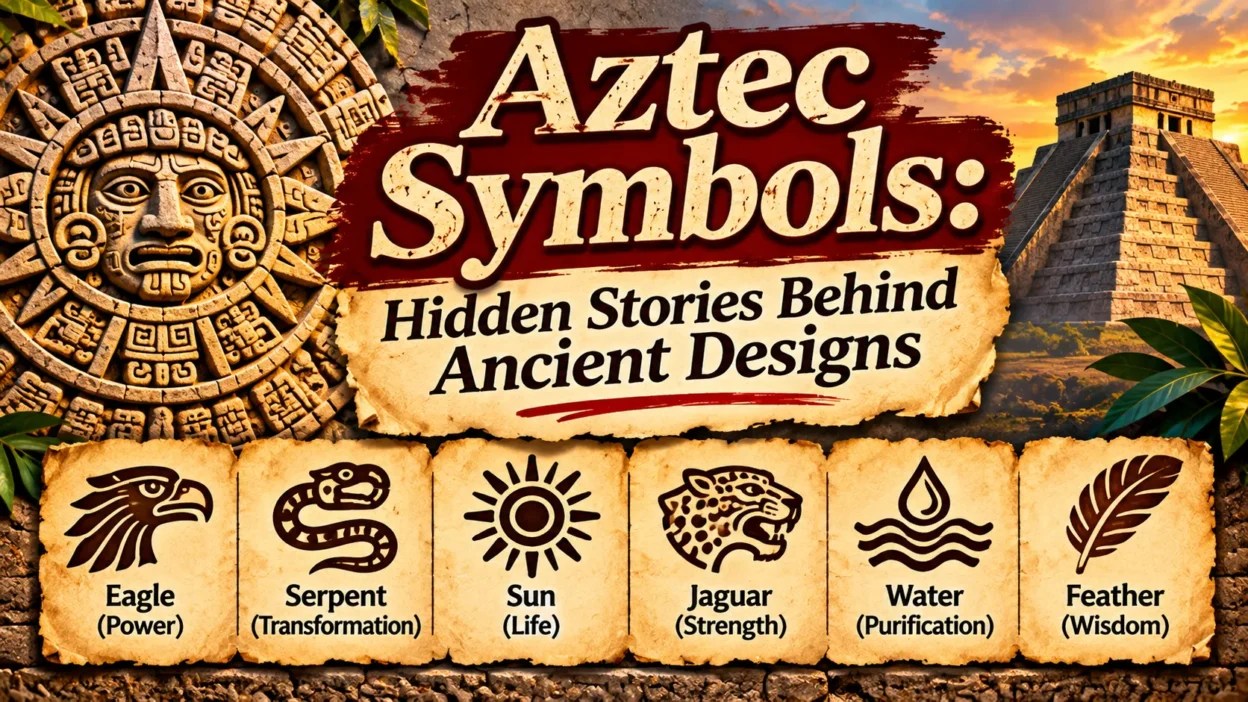
Aztec symbols represent the fascinating beliefs, traditions, and artistic expressions of one of the most remarkable civilizations in ancient history. From powerful eagles and mysterious jaguars to sacred serpents and celestial designs, these symbols communicated ideas about life, nature, spirituality, warfare, and the universe. The ancient Aztecs used these meaningful images in temples, sculptures, pottery, clothing, manuscripts, and ceremonial objects. Each design carried cultural significance and helped preserve stories that shaped their civilization.
Today, Aztec symbols continue to attract historians, artists, tattoo enthusiasts, and people interested in ancient Mexican culture. Their distinctive patterns and historical meanings make them especially interesting to explore. Some symbols connect with powerful gods, while others represent animals, natural elements, calendar signs, and important religious traditions. Understanding these designs offers a deeper appreciation of the Aztec worldview and its influence on Mesoamerican history. Whether you are researching ancient symbolism or searching for meaningful design inspiration, this guide explores popular Aztec symbols, their meanings, and the fascinating stories behind them.
☀️ What Are Aztec Symbols and What Do They Represent?
Aztec symbols are visual representations that communicate religious beliefs, historical events, natural elements, and cultural traditions associated with the ancient Mexica civilization. These designs appeared in stone monuments, temples, illustrated manuscripts, pottery, jewelry, and ceremonial objects.
Unlike ordinary decorative patterns, many Aztec symbols communicated specific ideas about the world. Animals represented important connections with nature, celestial images reflected religious beliefs, and calendar signs helped people understand the passage of time.
The Aztecs developed a rich visual language that combined artistic creativity with cultural knowledge. Their symbols helped communicate stories about powerful deities, creation, warfare, agriculture, and the relationship between humans and the natural world.
Some important themes represented through Aztec symbolism include:
- Nature: Animals, plants, water, fire, and other natural elements.
- Spirituality: Religious beliefs, supernatural forces, and important deities.
- Strength: Warriors, eagles, jaguars, and military traditions.
- Time: Calendar signs, celestial movements, and cosmic cycles.
- Creation: Stories about the origin of the world and the universe.
- Cultural identity: Traditions, community life, and historical achievements.
🐍 1. Quetzalcoatl – The Feathered Serpent Symbol
Quetzalcoatl is one of the most recognizable figures in Aztec and broader Mesoamerican mythology. His name is commonly translated as Feathered Serpent because his traditional representation combines the body of a serpent with the feathers of a quetzal bird.
This powerful image connects the earthly world with the heavens. Quetzalcoatl was associated with wind, knowledge, creation, fertility, and civilization. His influence extended beyond the Aztec civilization into earlier Mesoamerican traditions.
Symbolic associations:
- Wisdom and knowledge
- Creation and renewal
- Wind and natural forces
- Spiritual traditions
- Connection between earth and sky
The feathered serpent remains one of the most recognizable ancient Mexican designs because of its distinctive appearance and important mythological background.
☀️ 2. Aztec Sun Symbol
The sun held enormous importance in Aztec religious beliefs because it provided light, warmth, and energy for life. The Aztecs believed that maintaining cosmic balance was essential for the continuation of the universe.
Sun imagery appeared in religious sculptures, ceremonial objects, and the famous Stone of the Sun. Its central figure is commonly associated with Tonatiuh, an important solar deity.
Symbolic associations:
- Life and energy
- Light and warmth
- Cosmic order
- Time and celestial movement
- Renewal and continuity
The Aztec sun symbol is particularly popular in modern artwork because its circular patterns and detailed designs reflect the artistic achievements of the ancient civilization.
🦅 3. Aztec Eagle Symbol
The eagle represented an important part of Aztec mythology, military traditions, and artistic expression. Its ability to fly high above the ground connected it with the sky and solar imagery.
Eagles were also associated with the famous Eagle Warriors, a prestigious military group within Aztec society. Their identity reflected the bird’s strength, courage, and powerful hunting abilities.
Symbolic associations:
- Courage and bravery
- Strength and leadership
- Warrior traditions
- Connection with the sun
- Military identity
The eagle also appears in the foundation story of Tenochtitlan, making it an important image in Mexican cultural history.
🐆 4. Aztec Jaguar Symbol
The jaguar was one of the most powerful animals represented in Aztec art and mythology. Its strength, hunting abilities, and association with darkness made it an important figure in religious traditions.
Jaguar Warriors formed a prestigious military group and were recognized for their distinctive animal-inspired identity. The jaguar also appeared in supernatural stories and artistic representations connected with powerful natural forces.
Symbolic associations:
- Physical strength
- Courage and determination
- Mystery and darkness
- Warrior identity
- Power and authority
Today, jaguar imagery remains popular in Aztec-inspired artwork because of its bold appearance and historical importance.
💀 5. Aztec Skull Symbol
Skull imagery played an important role in Aztec religious traditions and beliefs about death. The Aztecs understood death as part of a larger spiritual and cosmic system rather than simply an ending.
Skulls appeared in sculptures, ceremonial decorations, and structures known as tzompantli, which displayed human skulls. These objects had religious, political, and ceremonial significance.
Symbolic associations:
- Death and mortality
- Religious ceremonies
- The afterlife
- Spiritual traditions
- The relationship between life and death
Aztec skull designs are often used in modern Mexican-inspired artwork, but they should not automatically be confused with the separate traditions of Día de los Muertos.
🌊 6. Aztec Water Symbol (Atl)
Water was essential to the survival and development of Aztec communities. It supported agriculture, provided drinking water, and influenced transportation and settlement patterns.
Atl is the Nahuatl word for water and represents one of the twenty signs in the traditional Aztec ritual calendar. Water imagery was also associated with fertility, rainfall, and the natural environment.
Symbolic associations:
- Life and nourishment
- Agriculture and fertility
- Rain and rivers
- Renewal and growth
- Natural resources
The water symbol demonstrates how closely Aztec culture connected everyday survival with religious and artistic traditions.
🔥 7. Aztec Fire Symbol
Fire was an important element in Aztec ceremonies, mythology, and beliefs about the universe. It provided warmth and light while also playing a significant role in religious practices.
One recognizable fire-related figure was Xiuhcoatl, the Fire Serpent. This supernatural creature was associated with solar power and cosmic movement.
Symbolic associations:
- Transformation
- Energy and warmth
- Religious ceremonies
- Solar imagery
- Cosmic movement
Fire-related designs are especially interesting because they demonstrate how the Aztecs represented natural forces through powerful mythological figures.
🌙 8. Aztec Moon Symbol
The moon appeared in Aztec mythology and religious artwork as part of the civilization’s understanding of celestial movements. Its changing appearance helped represent natural cycles and the passage of time.
Coyolxauhqui is an important figure in Aztec mythology whose story is connected with Huitzilopochtli and the moon in traditional interpretations.
Symbolic associations:
- Night and darkness
- Celestial cycles
- Natural changes
- Religious mythology
- The passage of time
Moon-related imagery offers an interesting perspective on how ancient communities interpreted the relationship between the heavens and human life.
🌽 9. Aztec Maize Symbol
Maize, commonly known as corn, was one of the most important crops in ancient Aztec society. It provided food, supported agricultural communities, and played a major role in religious and cultural traditions.
Cinteotl was an important deity associated with maize. Agricultural imagery reflected the importance of planting, harvesting, rainfall, and food production.
Symbolic associations:
- Agriculture and farming
- Nourishment and survival
- Fertility and growth
- Harvest and abundance
- Community prosperity
Maize symbolism provides a valuable connection between Aztec religious beliefs and the practical realities of everyday life.
💧 10. Tlaloc Symbol
Tlaloc was an important Aztec deity associated with rain, storms, water, and agricultural fertility. His influence was particularly significant because farming communities depended on seasonal rainfall to grow their crops.
Traditional representations of Tlaloc often feature distinctive eyes and facial characteristics that make his imagery recognizable in ancient Mexican art.
Symbolic associations:
- Rain and storms
- Water and nourishment
- Agricultural fertility
- Natural forces
- Seasonal renewal
Tlaloc’s importance demonstrates how the Aztecs connected religious traditions with the natural conditions that supported their communities.
🪞 11. Tezcatlipoca – The Smoking Mirror Symbol
Tezcatlipoca was a major deity in Aztec mythology. His name is commonly translated as Smoking Mirror, referring to an important aspect of his traditional identity.
He was associated with night, conflict, rulership, divination, and supernatural power. Obsidian mirrors were particularly connected with his imagery because of their dark reflective surfaces.
Symbolic associations:
- Mystery and the unknown
- Night and darkness
- Power and authority
- Divination
- Conflict and transformation
The Smoking Mirror is one of the most fascinating examples of how ordinary materials gained deeper religious significance in Aztec culture.
🌺 12. Xochitl – The Aztec Flower Symbol
Xochitl means flower in Nahuatl and represents one of the twenty traditional Aztec calendar signs. Flowers also appeared frequently in Aztec poetry, ceremonies, artistic expressions, and decorative objects.
Their cultural importance extended beyond physical beauty. Flower imagery could communicate ideas about preciousness, creativity, life, and the temporary nature of existence.
Symbolic associations:
- Beauty and creativity
- Nature and growth
- Artistic expression
- Celebration and life
- Preciousness
The flower symbol is particularly interesting for people exploring the connection between ancient Mexican art and natural imagery.
🪶 13. Aztec Hummingbird Symbol
The hummingbird was closely associated with Huitzilopochtli, an important Aztec deity connected with the sun and warfare. Its energetic movement and distinctive appearance made it a recognizable creature in Mesoamerican traditions.
Hummingbirds also appeared in beliefs concerning fallen warriors and the spiritual world. Their imagery reflected the relationship between nature, religious traditions, and military identity.
Symbolic associations:
- Energy and vitality
- Warrior traditions
- Courage and determination
- Natural beauty
- Spiritual significance
The hummingbird continues to inspire modern designs because of its delicate appearance and powerful cultural connections.
🏠 14. Calli – The Aztec House Symbol
Calli means house in Nahuatl and represents one of the twenty signs in the Aztec ritual calendar. Its glyph is commonly represented by a stylized building.
A house was an essential part of everyday community life. It provided shelter and represented the spaces where families maintained their traditions and relationships.
Symbolic associations:
- Home and shelter
- Family and community
- Stability and belonging
- Protection
- Everyday life
Calli demonstrates how the Aztec calendar included familiar objects from the natural and human environments.
🦎 15. Cuetzpalin – The Aztec Lizard Symbol
Cuetzpalin means lizard in Nahuatl and is one of the twenty traditional Aztec calendar signs. Lizards were familiar animals within the natural environment and appeared in ancient Mesoamerican artistic traditions.
The calendar sign demonstrates how the Aztecs used recognizable animals to organize their system of measuring and interpreting time.
Symbolic associations:
- Wildlife and nature
- Animal imagery
- Calendar traditions
- Natural surroundings
- Cultural storytelling
Cuetzpalin is a useful example of how everyday creatures became part of a complex historical calendar system.
🌬️ 16. Ehecatl – The Aztec Wind Symbol
Ehecatl means wind in Nahuatl and represents one of the twenty Aztec calendar signs. Wind was also associated with Ehecatl, a form of Quetzalcoatl connected with the movement of air.
Traditional representations of this deity often include a distinctive beaked mask. This feature helped identify the wind-related figure in Aztec religious art.
Symbolic associations:
- Air and wind
- Movement and change
- Natural forces
- Spiritual traditions
- Connection with Quetzalcoatl
Wind symbolism reflects the importance of invisible natural forces in the Aztec understanding of the universe.
🦌 17. Mazatl – The Aztec Deer Symbol
Mazatl means deer in Nahuatl and represents one of the twenty signs of the sacred calendar. Deer appeared in the natural environment and were represented in different Mesoamerican artistic traditions.
The deer glyph is an interesting example of how animals helped organize the Aztec calendar and communicate cultural information.
Symbolic associations:
- Wildlife and nature
- Animal representation
- Calendar traditions
- Natural surroundings
- Mesoamerican heritage
🐇 18. Tochtli – The Aztec Rabbit Symbol
Tochtli means rabbit in Nahuatl and is one of the twenty Aztec calendar signs. Rabbits also appeared in Mesoamerican mythology, including stories associated with the moon.
The rabbit became a recognizable element of the traditional calendar system and demonstrated how animal imagery connected religious traditions with everyday observations of nature.
Symbolic associations:
- Wildlife and nature
- Moon-related mythology
- Calendar symbolism
- Animal traditions
- Fertility in broader Mesoamerican interpretations
💀 19. Miquiztli – The Aztec Death Symbol
Miquiztli means death in Nahuatl and is one of the twenty signs in the Aztec ritual calendar. It reflects the important place that mortality and the afterlife held in Mexica religious beliefs.
The symbol should be understood within its original cultural context rather than treated as a simple representation of bad luck or negativity.
Symbolic associations:
- Mortality and death
- The afterlife
- Religious beliefs
- Calendar traditions
- Cosmic cycles
Miquiztli provides an important example of how the Aztec calendar represented different aspects of existence.
🪨 20. Tecpatl – The Aztec Flint Symbol
Tecpatl means flint or flint knife and represents one of the twenty calendar signs. Flint and obsidian were important materials in ancient Aztec society because they could be shaped into sharp tools and ceremonial objects.
The glyph is generally represented as a stylized blade, reflecting the historical importance of stone craftsmanship.
Symbolic associations:
- Stone tools and craftsmanship
- Ceremonial traditions
- Ancient technology
- Calendar symbolism
- Material culture
Tecpatl is particularly interesting for understanding the connection between everyday objects and ancient symbolic systems.
📅 21. The 20 Aztec Calendar Symbols and Their Meanings
The Aztec calendar is one of the most fascinating parts of Mexica civilization. Its 260-day ritual calendar, known as Tonalpohualli, combined twenty day signs with thirteen numbers to create a repeating cycle of 260 unique combinations.
Each sign represented a recognizable object, animal, natural element, or concept. These signs played an important role in religious ceremonies, divination, and the interpretation of time.
Here are all twenty traditional Aztec calendar signs:
| No. | Aztec Symbol | English Meaning |
|---|---|---|
| 1 | Cipactli | Crocodile or Earth Monster |
| 2 | Ehecatl | Wind |
| 3 | Calli | House |
| 4 | Cuetzpalin | Lizard |
| 5 | Coatl | Serpent |
| 6 | Miquiztli | Death |
| 7 | Mazatl | Deer |
| 8 | Tochtli | Rabbit |
| 9 | Atl | Water |
| 10 | Itzcuintli | Dog |
| 11 | Ozomatli | Monkey |
| 12 | Malinalli | Twisted Grass |
| 13 | Acatl | Reed |
| 14 | Ocelotl | Jaguar |
| 15 | Cuauhtli | Eagle |
| 16 | Cozcacuauhtli | Vulture |
| 17 | Ollin | Movement |
| 18 | Tecpatl | Flint |
| 19 | Quiahuitl | Rain |
| 20 | Xochitl | Flower |
These signs demonstrate the importance of animals, plants, natural elements, and everyday objects in Aztec culture. Each sign formed part of a larger calendar system rather than functioning as an isolated decorative symbol.
🌀 22. Ollin – The Aztec Movement Symbol
Ollin means movement in Nahuatl and is one of the most recognizable signs in the Aztec ritual calendar. It is particularly important because the present cosmic era in Aztec mythology is known as Nahui Ollin, or Four Movement.
The symbol commonly features a central design surrounded by elements representing movement and direction. Its appearance reflects the Aztec understanding of cosmic cycles and the forces that shaped existence.
Symbolic associations:
- Movement and change
- Cosmic cycles
- Transformation
- The Fifth Sun
- Time and the universe
Ollin is frequently selected for modern Aztec-inspired designs because of its distinctive geometric appearance and historical significance.
🐕 23. Itzcuintli – The Aztec Dog Symbol
Itzcuintli means dog in Nahuatl and represents one of the twenty Aztec calendar signs. Dogs held an important position in Aztec beliefs about death and the journey through the afterlife.
In particular, the dog was associated with helping deceased individuals cross difficult parts of the underworld. This connection made dogs important figures in religious and spiritual traditions.
Symbolic associations:
- Animal companionship
- The journey after death
- Spiritual traditions
- Loyalty in modern interpretations
- Calendar symbolism
🐒 24. Ozomatli – The Aztec Monkey Symbol
Ozomatli means monkey in Nahuatl and is one of the traditional signs of the Aztec calendar. Monkeys appeared in Mesoamerican artistic and mythological traditions and were sometimes connected with creative activities.
The symbol demonstrates how the Aztecs incorporated different animals into their system of recording time and interpreting the world.
Symbolic associations:
- Wildlife and nature
- Animal imagery
- Calendar traditions
- Artistic themes
- Cultural storytelling
🌿 25. Malinalli – The Aztec Twisted Grass Symbol
Malinalli refers to twisted grass and represents one of the twenty signs in the Aztec calendar. Plant fibers were useful in everyday life because they could be turned into cords, ropes, and other practical materials.
The calendar sign reflects the importance of natural resources in ancient Mexican society.
Symbolic associations:
- Plant life
- Natural materials
- Traditional craftsmanship
- Calendar symbolism
- Everyday resources
🌾 26. Acatl – The Aztec Reed Symbol
Acatl means reed in Nahuatl and is another important calendar sign. Reeds were familiar materials in the lakeside environment surrounding Tenochtitlan and other communities.
The symbol demonstrates how common elements of the natural world became part of the Aztec system of timekeeping.
Symbolic associations:
- Plants and nature
- Natural resources
- Calendar traditions
- Environmental connections
- Traditional materials
🌧️ 27. Quiahuitl – The Aztec Rain Symbol
Quiahuitl means rain in Nahuatl and represents one of the twenty calendar signs. Rain was essential for agriculture, making it an important element of Aztec religious beliefs and everyday life.
The symbol also connects with Tlaloc, the rain deity whose influence was closely associated with agricultural prosperity.
Symbolic associations:
- Rain and weather
- Agriculture
- Water and fertility
- Natural cycles
- Seasonal changes
🦅 28. Cozcacuauhtli – The Aztec Vulture Symbol
Cozcacuauhtli is traditionally translated as vulture and represents one of the twenty Aztec day signs. Birds appeared throughout Mesoamerican artwork, mythology, and calendar traditions.
The vulture is a distinctive example of the animal imagery used in the Aztec system of measuring time.
Symbolic associations:
- Birds and wildlife
- Natural cycles
- Animal imagery
- Calendar traditions
- Ancient artwork
🐊 29. Cipactli – The Aztec Crocodile Symbol
Cipactli is commonly translated as crocodile or Earth Monster and represents the first sign in the traditional sequence of twenty Aztec calendar signs.
Its supernatural appearance connects with ancient creation traditions and the Aztec understanding of the earth. The symbol demonstrates how mythological creatures became part of the civilization’s visual language.
Symbolic associations:
- Earth and creation
- Ancient mythology
- Natural creatures
- Calendar traditions
- Cosmic beliefs
🐍 30. Coatl – The Aztec Serpent Symbol
Coatl means serpent in Nahuatl and represents one of the twenty Aztec calendar signs. Serpents appeared frequently in Mesoamerican mythology and artistic traditions, where they could represent different religious and natural concepts.
The feathered serpent associated with Quetzalcoatl is one of the most recognizable examples of this broader tradition.
Symbolic associations:
- Serpents and nature
- Mythological traditions
- Fertility and natural forces
- Religious imagery
- Calendar symbolism
🗡️ 31. Aztec Obsidian Symbol
Obsidian is a naturally occurring volcanic glass that played an important role in ancient Aztec technology and artistic traditions. People used it to produce sharp blades, tools, and reflective objects.
Its dark appearance and reflective surface also connected it with religious imagery, especially the Smoking Mirror associated with Tezcatlipoca.
Symbolic associations:
- Ancient craftsmanship
- Volcanic materials
- Reflective surfaces
- Religious traditions
- Historical technology
🛡️ 32. Aztec Shield Symbol
The Aztec shield, known as Chimalli, was an important piece of military equipment. These shields sometimes featured colorful feathers, geometric designs, and decorative materials.
Their appearance could communicate military identity, status, and cultural affiliation in addition to providing physical protection.
Symbolic associations:
- Defense and protection
- Warrior traditions
- Military identity
- Social status
- Artistic craftsmanship
⚔️ 33. Aztec Warrior Symbol
Warrior imagery occupied an important place in Aztec society. Eagle Warriors and Jaguar Warriors were particularly prominent groups whose identities were connected with powerful animals.
Their clothing, shields, weapons, and ceremonial objects reflected their military roles and social positions.
Symbolic associations:
- Courage and bravery
- Strength and discipline
- Leadership
- Military achievements
- Warrior identity
🏛️ 34. Aztec Pyramid Symbol
Pyramids and temples were important architectural features of ancient Aztec cities. These structures served religious, political, and ceremonial purposes.
The Templo Mayor in Tenochtitlan was one of the most significant religious structures in the Aztec capital. Its architecture reflected the relationship between religious traditions and political authority.
Symbolic associations:
- Sacred architecture
- Religious traditions
- Political authority
- Ceremonial spaces
- Ancient civilization
🔥 35. Xiuhcoatl – The Aztec Fire Serpent Symbol
Xiuhcoatl is commonly translated as Fire Serpent or Turquoise Serpent. This supernatural creature was associated with solar power, cosmic movement, and Aztec mythology.
The figure is particularly recognizable because two fire serpents appear around the outer border of the famous Stone of the Sun.
Symbolic associations:
- Fire and energy
- Solar movement
- Cosmic power
- Time and mythology
- Transformation
🌳 36. Aztec Tree Symbol
Tree imagery appeared in different Mesoamerican traditions and could communicate ideas about nature, fertility, and the organization of the universe.
Trees provided essential resources such as wood, food, and shelter. Their importance in everyday life made natural plant imagery a recognizable part of ancient artistic traditions.
Symbolic associations:
- Nature and growth
- Fertility and renewal
- Natural resources
- Environmental connections
- Living traditions
It is worth remembering that some modern Aztec-inspired tree designs draw on broader Mesoamerican traditions rather than one specific historical Aztec glyph.
💚 37. Aztec Jade Symbol
Jade and other greenstone materials were highly valued in ancient Mesoamerican societies. They appeared in jewelry, ceremonial objects, ornaments, and decorative artwork.
These materials were considered precious because of their beauty, rarity, and cultural significance. Greenstone could also carry associations with life, fertility, and water.
Symbolic associations:
- Preciousness and value
- Life and fertility
- Ceremonial importance
- Natural beauty
- Artistic craftsmanship
🐚 38. Aztec Shell Symbol
Shells were used in ancient Aztec artistic and ceremonial objects. Their distinctive shapes and natural beauty made them valuable materials for decorative and religious purposes.
One interesting example is the wind jewel associated with Quetzalcoatl and wind-related traditions. It was made from a sliced conch shell and featured a recognizable spiral form.
Symbolic associations:
- Aquatic materials
- Ceremonial traditions
- Natural beauty
- Artistic design
- Wind-related imagery
⚡ 39. Aztec Lightning and Storm Symbolism
Storms and lightning reflected the powerful natural forces that influenced Aztec communities. Rainfall was essential for farming, while destructive weather could threaten crops and settlements.
Tlaloc was particularly important in this context because he was associated with rain, storms, and agricultural fertility.
Symbolic associations:
- Weather and storms
- Rain and agriculture
- Natural power
- Religious beliefs
- Seasonal changes
🎨 40. Aztec Geometric Patterns
Aztec geometric patterns are recognizable for their repeated shapes, carefully arranged lines, borders, and decorative elements. These designs appeared on buildings, pottery, clothing, and ceremonial objects.
Some geometric designs formed part of recognizable cultural imagery, while others served decorative purposes. Their original context is important when interpreting their historical significance.
Symbolic associations:
- Artistic craftsmanship
- Cultural identity
- Repeated visual patterns
- Decorative traditions
- Ancient design techniques
🖋️ Popular Aztec Symbols for Tattoos and Their Meanings
Aztec-inspired tattoos attract attention because of their detailed artwork, recognizable animals, and connections with ancient Mexican history. Many people explore these designs to express an interest in mythology, traditional art, or cultural heritage.
Here are some popular ideas:
- Quetzalcoatl Tattoo: Inspired by the feathered serpent and its connection with creation and knowledge.
- Aztec Sun Tattoo: Based on solar imagery and the famous Stone of the Sun.
- Jaguar Tattoo: Inspired by warrior traditions and the jaguar’s importance in Aztec culture.
- Eagle Tattoo: Represents the eagle’s historical connections with warriors and solar imagery.
- Ollin Tattoo: Features the calendar sign associated with movement and the present cosmic age.
- Aztec Calendar Tattoo: Uses traditional calendar imagery and historical designs.
- Tlaloc Tattoo: Inspired by the deity associated with rain and storms.
- Xiuhcoatl Tattoo: Features the mythological Fire Serpent.
- Miquiztli Tattoo: Inspired by the traditional death calendar sign.
- Aztec Geometric Tattoo: Uses decorative patterns influenced by ancient Mexican artwork.
When choosing an Aztec tattoo, research the historical meaning of the design rather than relying only on modern interpretations. Some images have religious or ceremonial significance and deserve particular cultural respect.
🛡️ Aztec Symbols Associated With Strength, Courage, and Protection
Several Aztec images are commonly explored today for their connections with strength, military identity, and powerful natural forces.
Understanding their historical backgrounds helps distinguish authentic cultural associations from modern creative interpretations.
| Aztec symbol | Historical connection | Modern interpretation |
|---|---|---|
| Eagle | Eagle Warriors and solar imagery | Courage and leadership |
| Jaguar | Jaguar Warriors and mythology | Strength and confidence |
| Quetzalcoatl | Feathered serpent deity | Wisdom and transformation |
| Chimalli | Traditional warrior shield | Defense and protection |
| Sun | Solar religious traditions | Energy and vitality |
| Obsidian Mirror | Tezcatlipoca | Mystery and reflection |
| Hummingbird | Huitzilopochtli | Energy and determination |
| Xiuhcoatl | Fire Serpent mythology | Power and transformation |
These associations offer inspiration, but not every modern interpretation represents an established historical Aztec belief.
🏺 Where Were Aztec Symbols Used in Ancient Society?
Aztec symbols appeared in many aspects of daily life, from religious ceremonies to artistic objects and monumental architecture. Their use depended on the purpose of the object and the cultural traditions associated with it.
1. Temples and Religious Buildings
Temples featured carved sculptures, sacred imagery, and decorative elements associated with important deities. These structures played central roles in religious ceremonies and public life.
2. Codices and Illustrated Manuscripts
Aztec codices used visual signs and illustrations to record historical events, calendar information, religious traditions, and other important knowledge.
3. Clothing and Jewelry
Feathers, shells, precious stones, and decorative designs appeared in clothing and personal ornaments. Certain materials and artistic details could communicate social status and identity.
4. Pottery and Ceremonial Objects
Artists incorporated recognizable images into pottery, vessels, ornaments, and objects used in religious ceremonies.
5. Stone Monuments and Sculptures
Large stone carvings preserved important historical and religious imagery. The Stone of the Sun is one of the best-known examples of this artistic tradition.
These different uses demonstrate how deeply visual symbolism influenced Aztec culture and communication.
📖 What Is the Difference Between Aztec Symbols and Aztec Glyphs?
Aztec symbols and glyphs are related terms, but they do not always describe exactly the same thing. A symbol is a visual representation that communicates an idea, object, or concept, while a glyph is a more specific visual sign used within a writing or recording system.
For example, an eagle image may represent an important animal or religious association. Cuauhtli is the eagle sign used in the Aztec calendar.
Aztec codices combined different types of visual information to communicate names, places, dates, historical events, and religious traditions. Understanding this difference makes it easier to interpret ancient Mexican artwork accurately.
🌎 Why Are Aztec Symbols Still Popular Today?
Aztec symbols continue to attract attention because of their distinctive appearance and fascinating historical background. Their influence can be seen in contemporary artwork, educational materials, fashion, tattoos, and cultural discussions.
Several reasons explain their continued popularity:
- Historical importance: They offer a connection to the history of ancient Mexico.
- Distinctive artwork: Their geometric designs and animal imagery create recognizable visual styles.
- Cultural heritage: They represent the traditions and artistic achievements of the Mexica civilization.
- Tattoo inspiration: Their detailed imagery provides ideas for meaningful artistic designs.
- Educational value: They help people understand ancient religious beliefs and calendar systems.
- Mythological stories: Their connections with deities and creation stories make them fascinating subjects.
The continued interest in these designs also highlights the importance of respecting the cultural heritage behind them.
❓ Frequently Asked Questions About Aztec Symbols
Here are some common questions about Aztec symbols, their meanings, and their historical significance.
1. What Is the Most Famous Aztec Symbol?
The Stone of the Sun is one of the most famous examples of Aztec symbolic artwork. Its detailed carvings represent important ideas connected with solar traditions, cosmic history, and the Aztec understanding of time.
2. What Does the Aztec Eagle Symbol Mean?
The eagle was associated with solar imagery, warriors, courage, and military traditions. It also played an important role in the foundation story of Tenochtitlan.
3. What Does the Aztec Jaguar Symbol Represent?
The jaguar was connected with strength, darkness, mythology, and warrior identity. Jaguar Warriors were an important military group in Aztec society.
4. What Does the Aztec Feathered Serpent Symbolize?
The feathered serpent represents Quetzalcoatl, a major deity associated with wind, knowledge, creation, fertility, and civilization.
5. What Does the Aztec Sun Symbol Mean?
The sun represented light, warmth, life, and cosmic order. Solar imagery played an important role in Aztec religious traditions and mythology.
6. What Does the Aztec Skull Symbol Represent?
Skulls were connected with death, religious ceremonies, and beliefs about the afterlife. They appeared in sculptures and ceremonial structures throughout Aztec culture.
7. What Does the Aztec Ollin Symbol Mean?
Ollin means movement in Nahuatl. It represents one of the twenty calendar signs and is associated with the Fifth Sun in Aztec creation mythology.
8. What Is the Aztec Symbol for Protection?
There was no single universal Aztec symbol for every form of protection. Traditional shields, known as chimalli, were used for physical defense, while different religious images carried their own specific meanings.
9. What Are the 20 Aztec Calendar Symbols?
The twenty calendar signs are Cipactli, Ehecatl, Calli, Cuetzpalin, Coatl, Miquiztli, Mazatl, Tochtli, Atl, Itzcuintli, Ozomatli, Malinalli, Acatl, Ocelotl, Cuauhtli, Cozcacuauhtli, Ollin, Tecpatl, Quiahuitl, and Xochitl.
10. What Does the Aztec Serpent Symbol Mean?
Serpents appeared in different Mesoamerican religious and artistic traditions. They could be associated with natural forces, fertility, and mythology. The feathered serpent was particularly connected with Quetzalcoatl.
11. What Is the Difference Between the Aztec Calendar and the Sun Stone?
The Aztec calendar refers to systems used to organize and interpret time. The Stone of the Sun is a carved monument containing imagery associated with solar and cosmic beliefs. Although people often call it the Aztec Calendar Stone, it was not simply a modern-style calendar.
12. Are Aztec Symbols the Same as Mayan Symbols?
No. The Aztec and Maya were different Mesoamerican civilizations with their own histories, languages, and artistic traditions. Although they shared some broader cultural themes, their writing systems and symbolic traditions were not identical.
13. What Does the Aztec Flower Symbol Mean?
Xochitl means flower in Nahuatl and represents one of the twenty Aztec calendar signs. Flowers also appeared in ancient poetry, religious ceremonies, and artistic traditions.
14. What Does the Aztec Water Symbol Mean?
Atl means water in Nahuatl. It is one of the twenty traditional calendar signs and reflects the importance of water in agriculture, nature, and everyday life.
15. Can I Use Aztec Symbols for Tattoo Designs?
Yes, you can explore Aztec-inspired tattoo designs, but research their original meanings and cultural significance first. Religious and ceremonial imagery deserves particular respect.
Conclusion
Aztec symbols provide a fascinating look into the beliefs, traditions, and artistic achievements of the ancient Mexica civilization. From the powerful eagle and mysterious jaguar to Quetzalcoatl, the Aztec Sun Stone, and the twenty calendar signs, these designs communicate different ideas about nature, spirituality, warfare, and the universe. They were much more than decorative artwork because they helped preserve important cultural knowledge and religious stories.
Whether you are exploring Aztec symbols for historical research, educational purposes, or tattoo inspiration, understanding their original meanings makes each design more interesting. By learning about these ancient images, you can appreciate the creativity, traditions, and lasting cultural influence of one of Mesoamerica’s most remarkable civilizations.

Jessica Morgan is a writer and content creator at Blesslume, dedicated to sharing meaningful blessings, heartfelt prayers, inspiring wishes, and uplifting messages. She is passionate about helping people find the right words to celebrate special moments, offer encouragement, and spread kindness. Through thoughtful and inspiring content, Jessica aims to bring hope, positivity, and connection to readers around the world.