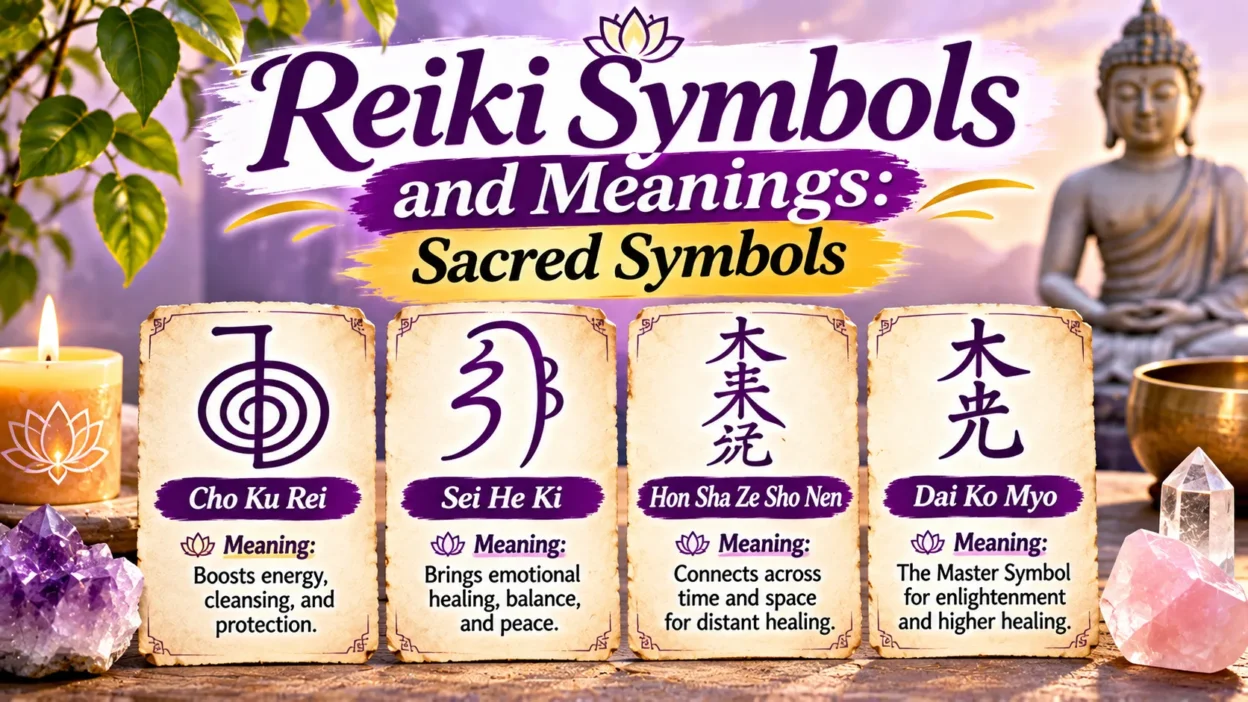
Reiki symbols are meaningful signs used in the Japanese energy healing practice of Reiki to support meditation, relaxation, spiritual reflection, and energy-focused healing sessions. Each symbol has a distinct name, traditional purpose, and method of use. Some are associated with physical and emotional well-being, while others focus on mental clarity, distance healing, spiritual connection, and personal empowerment. Practitioners traditionally learn these symbols through Reiki training and use them alongside specific techniques, hand positions, and intentions.
Whether you are exploring Reiki for the first time, learning about Japanese spiritual traditions, or researching the meanings behind these fascinating designs, understanding Reiki symbols can help you appreciate their cultural and spiritual significance. The five commonly taught Usui Reiki symbols include Cho Ku Rei, Sei Hei Ki, Hon Sha Ze Sho Nen, Dai Ko Myo, and Raku. Each has a different role within Reiki practice, and some are traditionally taught at particular training levels. In this guide, you will discover their names, meanings, traditional uses, differences, and the history behind these well-known Reiki symbols.
✨ What Are Reiki Symbols?
Reiki symbols are sacred or traditional signs used in certain Reiki lineages as part of energy healing practice. They are associated with specific intentions and are traditionally taught to students during Reiki training.
The symbols are generally drawn, visualized, or mentally focused on during a Reiki session. Practitioners may use them while placing their hands on or above different areas of the body, during meditation, or when performing distance Reiki.
The five commonly discussed symbols in Usui Reiki practice are:
- Cho Ku Rei: Power symbol.
- Sei Hei Ki: Mental and emotional symbol.
- Hon Sha Ze Sho Nen: Distance symbol.
- Dai Ko Myo: Master symbol.
- Raku: Completion or grounding symbol in some Reiki traditions.
Different Reiki schools and lineages may teach different symbols, interpretations, and methods. Therefore, not every Reiki practitioner follows exactly the same system.
🌟 1. Cho Ku Rei – The Reiki Power Symbol
Cho Ku Rei is commonly known as the Reiki power symbol. Its traditional purpose is to focus or intensify Reiki energy during a session. Many practitioners use it at the beginning of a treatment or when they want to direct their attention toward a particular area.
The symbol is often described through the phrase “Place the power of the universe here.” However, translations and interpretations vary between Reiki traditions.
Traditional uses of Cho Ku Rei:
- Focusing Reiki energy during a session.
- Beginning or closing a Reiki treatment.
- Supporting meditation and concentration.
- Directing attention toward a specific area.
- Setting an intention before a healing session.
- Symbolically emphasizing protection and energetic focus.
Cho Ku Rei is generally introduced during Reiki Level 2 training in many Usui Reiki systems.
💗 2. Sei Hei Ki – The Mental and Emotional Symbol
Sei Hei Ki is commonly associated with mental and emotional balance. Practitioners use it with the intention of addressing emotional concerns, calming the mind, and supporting personal reflection.
Its meaning is sometimes interpreted as “God and humanity become one” or described through ideas of harmony and balance. These interpretations depend on the Reiki lineage and translation.
Traditional uses of Sei Hei Ki:
- Supporting emotional balance.
- Encouraging calmness and relaxation.
- Focusing on stressful thoughts.
- Supporting meditation practices.
- Encouraging positive intentions.
- Exploring emotional self-awareness.
Sei Hei Ki is traditionally taught alongside Cho Ku Rei in many Level 2 Reiki courses.
🌍 3. Hon Sha Ze Sho Nen – The Distance Reiki Symbol
Hon Sha Ze Sho Nen is commonly called the distance Reiki symbol. It is traditionally used in practices intended to connect Reiki sessions with people, situations, or events beyond physical proximity.
Some practitioners also associate it with past and future healing intentions. In this context, the symbol represents a spiritual approach to connection that is not limited by physical distance.
Traditional uses of Hon Sha Ze Sho Nen:
- Distance Reiki sessions.
- Meditation focused on distant connections.
- Reflection on past experiences.
- Setting intentions for future events.
- Sending Reiki according to the practitioner’s tradition.
- Spiritual practices involving connection beyond physical space.
This symbol is commonly introduced during Level 2 Reiki training.
🌞 4. Dai Ko Myo – The Reiki Master Symbol
Dai Ko Myo is commonly known as the Reiki Master symbol. Its name is often translated as “Great Bright Light” and is associated with spiritual development, enlightenment, and deeper awareness.
In many Usui Reiki traditions, it is taught at the Master level. Practitioners may use it during advanced sessions, meditation, and Reiki attunement practices.
Traditional uses of Dai Ko Myo:
- Supporting spiritual development.
- Focusing on meditation and awareness.
- Reiki Master training.
- Traditional attunement practices.
- Encouraging personal reflection.
- Symbolically connecting with spiritual light.
Some Reiki lineages also teach alternative master symbols, so the design and use of Dai Ko Myo can vary.
🔴 5. Raku – The Reiki Completion Symbol
Raku is commonly associated with completion and grounding in certain Reiki traditions. It is often described as a lightning-like symbol and is particularly associated with the conclusion of Reiki attunements.
Unlike the four other symbols commonly discussed in Usui Reiki, Raku is not included in every traditional Usui Reiki system. Its use is especially associated with certain Western Reiki lineages.
Traditional uses of Raku:
- Completing Reiki attunements.
- Supporting grounding after spiritual practices.
- Marking the end of an attunement process.
- Symbolically separating or closing an energy practice.
- Returning attention to the present moment.
Raku is usually introduced in advanced Reiki training rather than beginner-level courses.
📖 Reiki Symbols Chart and Their Meanings
Understanding the names and traditional purposes of Reiki symbols becomes easier when you compare them in one place.
| Reiki Symbol | Common Name | Traditional Association |
|---|---|---|
| Cho Ku Rei | Power Symbol | Focus and energy |
| Sei Hei Ki | Mental and Emotional Symbol | Emotional harmony |
| Hon Sha Ze Sho Nen | Distance Symbol | Distance Reiki |
| Dai Ko Myo | Master Symbol | Spiritual development |
| Raku | Completion Symbol | Grounding and completion |
This chart covers five commonly discussed symbols, but Reiki traditions may include additional symbols and variations.
🧘 How Are Reiki Symbols Used?
Reiki symbols are incorporated into traditional Reiki sessions through different techniques. Practitioners generally work with them according to their training, lineage, and personal practice.
Common methods include:
Drawing the Symbol: A practitioner may trace a symbol using a hand or finger while focusing on its traditional intention.
Visualizing the Symbol: Some practitioners mentally picture a symbol during meditation or a Reiki session.
Saying the Name: The symbol’s name may be repeated silently or aloud as part of a traditional practice.
Using Hand Positions: Practitioners may combine symbols with hand positions during a Reiki session.
Setting an Intention: Each symbol can be used as a focus for a particular intention, such as relaxation, emotional reflection, or spiritual development.
The specific method depends on the Reiki school. Some traditions teach particular sequences or ways to work with the symbols.
🌿 What Are the Benefits Associated With Reiki Symbols?
Reiki practitioners associate different symbols with particular intentions and spiritual practices. These associations are part of Reiki’s traditional framework rather than scientifically established effects of individual symbols.
Some commonly described purposes include:
- Energy focus: Cho Ku Rei is used to focus attention during Reiki sessions.
- Emotional reflection: Sei Hei Ki is associated with emotional and mental balance.
- Distance connection: Hon Sha Ze Sho Nen is traditionally used in distance Reiki.
- Spiritual development: Dai Ko Myo is associated with advanced spiritual practice.
- Grounding: Raku is used in certain traditions to mark completion and grounding.
Reiki may help some people feel relaxed, but scientific evidence does not establish that Reiki symbols generate or direct a measurable healing energy. Reiki should not replace professional medical care, diagnosis, or treatment.
🎓 Reiki Symbols and Their Training Levels
Reiki training is commonly organized into different levels. The symbols introduced at each level depend on the teacher and the specific lineage.
Reiki Level 1
The first level generally introduces Reiki principles, hand positions, basic practice, and introductory meditation techniques. Some traditional systems do not introduce the main sacred symbols at this stage.
Reiki Level 2
Level 2 commonly introduces three well-known symbols:
- Cho Ku Rei.
- Sei Hei Ki.
- Hon Sha Ze Sho Nen.
Students learn their traditional meanings and methods of use under the guidance of a Reiki teacher.
Reiki Level 3 or Master Level
Advanced training commonly introduces Dai Ko Myo and additional techniques related to Reiki practice and teaching.
Raku may also be taught in some lineages, particularly during attunement training.
🔍 What Is the Difference Between the Five Reiki Symbols?
Although all five symbols belong to Reiki traditions, each has a different traditional purpose.
| Symbol | Main Focus | Common Training Level |
|---|---|---|
| Cho Ku Rei | Power and focus | Level 2 |
| Sei Hei Ki | Mental and emotional harmony | Level 2 |
| Hon Sha Ze Sho Nen | Distance practice | Level 2 |
| Dai Ko Myo | Spiritual development | Master Level |
| Raku | Completion and grounding | Varies by lineage |
The most important difference is their intended use within Reiki practice. Students should learn the correct forms and interpretations from their own Reiki teachers because variations exist.
🇯🇵 History and Origins of Reiki Symbols
Reiki originated in Japan through the teachings of Mikao Usui in the early twentieth century. Usui developed a spiritual healing practice known as Usui Reiki Ryoho, which later spread internationally through his students and other Reiki teachers.
The symbols became an important part of several Reiki teaching traditions. Their use and transmission evolved as Reiki spread beyond Japan, particularly through Western Reiki lineages.
Over time, different schools developed their own teaching methods, interpretations, and additional symbols. This explains why modern Reiki resources sometimes present different symbol designs or meanings.
Understanding this history helps readers recognize that Reiki is not one completely uniform system. Its practices have developed across different communities and teaching traditions.
🕊️ Are Reiki Symbols Sacred?
Many Reiki traditions regard their symbols as sacred or spiritually significant. Practitioners may approach them with respect because of their association with traditional teachings, meditation, and spiritual development.
Some Reiki lineages historically taught symbols directly to students during training rather than presenting them publicly. Other modern teachers openly discuss the symbols and their meanings.
The importance of keeping symbols private depends on the lineage and teacher. Respecting a practitioner’s tradition is a thoughtful approach when studying Reiki.
❓ Frequently Asked Questions About Reiki Symbols
What Are the Five Main Reiki Symbols?
The five commonly discussed symbols are Cho Ku Rei, Sei Hei Ki, Hon Sha Ze Sho Nen, Dai Ko Myo, and Raku. Their meanings and teaching levels vary among Reiki traditions.
Which Reiki Symbol Is the Power Symbol?
Cho Ku Rei is commonly known as the Reiki power symbol. It is traditionally used to focus or intensify Reiki energy during a session.
What Does Sei Hei Ki Mean?
Sei Hei Ki is associated with mental and emotional harmony. Practitioners traditionally use it to support emotional reflection and relaxation.
What Is the Distance Reiki Symbol?
Hon Sha Ze Sho Nen is known as the distance Reiki symbol. It is traditionally used in Reiki practices involving people or situations beyond physical proximity.
What Is the Reiki Master Symbol?
Dai Ko Myo is commonly called the Reiki Master symbol. It is associated with spiritual development, enlightenment, and advanced Reiki training.
What Does the Raku Reiki Symbol Mean?
Raku is associated with completion and grounding in certain Reiki traditions. It is commonly used at the conclusion of some attunement practices.
How Many Reiki Symbols Are There?
There is no single number that applies to every Reiki tradition. Five symbols are commonly discussed in many modern Usui Reiki resources, but other lineages teach additional symbols.
Can Beginners Use Reiki Symbols?
Beginners can learn about Reiki symbols through educational resources, but traditional instruction generally introduces the main symbols during Level 2 training. The teaching sequence depends on the Reiki lineage.
Are Reiki Symbols Different in Every Tradition?
Yes. Some Reiki schools use different symbol variations, names, interpretations, and additional symbols. Students should follow the teaching approach of their chosen lineage.
Do Reiki Symbols Have Scientific Healing Powers?
There is no established scientific evidence that Reiki symbols produce measurable healing energy or cure medical conditions. Reiki may support relaxation for some people, but it should not replace evidence-based healthcare.
What Is the Most Powerful Reiki Symbol?
Cho Ku Rei is commonly called the power symbol, while Dai Ko Myo is associated with advanced spiritual practice. Reiki traditions do not have one universally accepted ranking of symbol power.
Are Reiki Symbols Japanese?
The Reiki practice originated in Japan, and the names of commonly taught symbols are written using Japanese-derived terms. Their designs and teaching methods have evolved through different Reiki lineages.
Conclusion
Reiki symbols are an important part of many traditional Reiki teaching systems. From Cho Ku Rei and its association with power to Sei Hei Ki’s connection with emotional harmony, Hon Sha Ze Sho Nen’s distance practice, Dai Ko Myo’s spiritual significance, and Raku’s role in completion, each symbol has a distinct place in Reiki traditions.
Understanding their names, meanings, and traditional applications provides a useful introduction to this Japanese spiritual practice. Whether you are researching Reiki for educational purposes, exploring meditation, or learning about energy healing traditions, these symbols offer an interesting look into the history and development of Reiki. Remember that their spiritual meanings come from traditional beliefs and practices, not established scientific evidence of healing powers.

Jessica Morgan is a writer and content creator at Blesslume, dedicated to sharing meaningful blessings, heartfelt prayers, inspiring wishes, and uplifting messages. She is passionate about helping people find the right words to celebrate special moments, offer encouragement, and spread kindness. Through thoughtful and inspiring content, Jessica aims to bring hope, positivity, and connection to readers around the world.