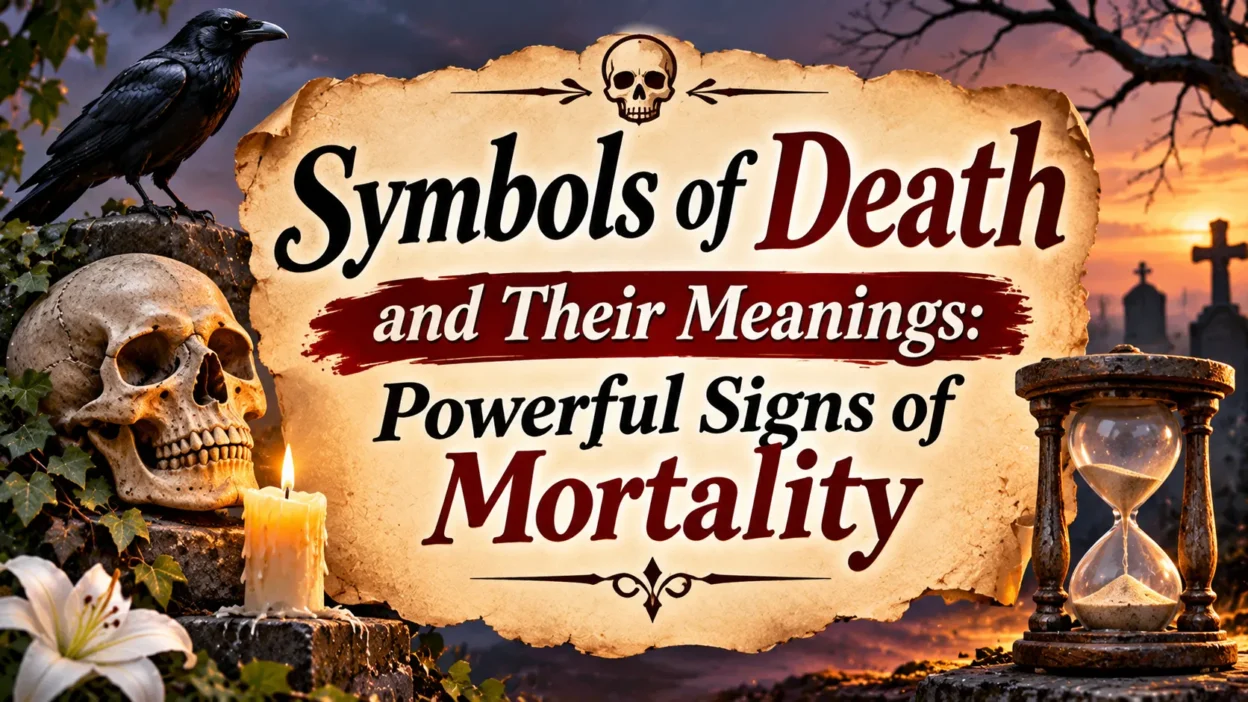
Symbols of death have appeared throughout human history in mythology, religion, literature, art, and everyday traditions. From skulls and black roses to ravens, hourglasses, and the Grim Reaper, these powerful images represent mortality, grief, remembrance, endings, and the mystery of what comes after life. Some symbols communicate sorrow and loss, while others represent transformation, rebirth, or the natural cycle of existence.
Understanding the symbols of death can help you explore their meanings in different cultures and traditions. Whether you are researching death symbolism for a tattoo, artwork, writing project, personal reflection, or general knowledge, this guide explores 50 recognizable symbols and the ideas associated with them.
What Are the Most Common Symbols of Death? 💀
Death symbols communicate ideas about mortality, loss, and the passage of time. Many familiar images have developed symbolic meanings through folklore, religious traditions, funeral customs, and popular culture.
Here are some of the most recognizable symbols associated with death:
- Skull: Represents mortality and the temporary nature of human life.
- Skeleton: Symbolizes death and the physical remains of the human body.
- Scythe: Represents the Grim Reaper and the end of life.
- Hourglass: Symbolizes passing time and the limited duration of life.
- Black Rose: Often represents mourning, loss, and farewell.
- Raven: Associated with mystery, death, and prophecy in some folklore.
- Gravestone: Represents remembrance, burial, and eternal rest.
- Coffin: Symbolizes the end of physical life and burial.
- Extinguished Candle: Represents a life that has come to an end.
- Wilted Flower: Symbolizes fading beauty, aging, and mortality.
These symbols do not always have one fixed interpretation. Their meanings can change depending on the culture, historical period, and context in which people use them.
Skull and Bone Symbols of Death ☠️
Skulls and bones are among the most recognizable representations of mortality. They appear in ancient artwork, religious imagery, historical monuments, tattoos, and modern designs. These symbols remind people of human mortality and the temporary nature of physical life.
- Human Skull: Represents death, mortality, and the reality that life eventually ends.
- Skeleton: Symbolizes the physical remains of a person and the inevitability of death.
- Skull and Crossbones: Traditionally communicates danger, poison, and potential fatal harm.
- Crossed Bones: Represents mortality, danger, and sometimes historical associations with burial.
- Skull With a Crown: Can symbolize the power of death over wealth, status, and authority.
- Skull With Flowers: Combines mortality with beauty, remembrance, and the cycle of life.
- Animal Skull: May represent wilderness, mortality, survival, or the relationship between humans and nature.
- Memento Mori Skull: Reminds viewers that death is unavoidable and encourages reflection on how they use their time.
Skull symbolism also appears in the artistic tradition known as memento mori, a Latin expression meaning “remember that you must die.” Artists have used skulls and related imagery to encourage people to reflect on life’s temporary nature.
Animals That Symbolize Death 🐦⬛
Animals have an important place in death symbolism, especially in folklore, mythology, and traditional stories. Some creatures become associated with death because of their nighttime habits, scavenging behavior, mysterious appearance, or roles in cultural legends.
- Raven: Often represents death, mystery, prophecy, and transformation in folklore.
- Black Crow: Sometimes appears as an omen of death or an image of mystery.
- Owl: Associated with death and supernatural knowledge in certain cultural traditions.
- Vulture: Represents decay, mortality, and the natural process of decomposition.
- Black Butterfly: In some traditions, symbolizes death, the soul, or spiritual transformation.
- Moth: Can represent darkness, transformation, and attraction to light.
- Bat: Associated with night, mystery, darkness, and the supernatural.
- Snake: Represents death and rebirth in some traditions because of its ability to shed its skin.
- Wolf: Can symbolize danger, death, wilderness, and the unknown.
- Black Dog: Appears in some European folklore as a supernatural creature associated with death or misfortune.
The meanings of these animals differ widely. For example, ravens can symbolize wisdom and intelligence, while butterflies often represent hope and transformation. Their connection with death depends on the particular story or tradition.
Flowers That Represent Death and Mourning 🥀
Flowers are often used to communicate emotions that are difficult to express through words. Their colors, appearance, and associations with funerals make certain varieties powerful symbols of grief, remembrance, and life’s temporary nature.
- Black Rose: Represents mourning, farewell, mystery, and endings. Naturally occurring truly black roses are not common; many are very dark red or specially colored.
- White Lily: Frequently associated with funerals, purity, peace, and remembrance.
- Chrysanthemum: Used in mourning and funeral traditions in several countries, including parts of Europe and East Asia.
- Red Poppy: Can symbolize remembrance of people who died during war, particularly in Commonwealth remembrance traditions.
- Wilted Rose: Represents lost love, fading beauty, and emotional sorrow.
- Dried Flowers: Symbolize memories, the passage of time, and beauty preserved after life has faded.
- Fallen Petals: Represent impermanence, loss, and the natural ending of a beautiful stage.
- Dark Dahlia: Can communicate mystery, elegance, and sadness in artistic symbolism.
- White Carnation: Often used in remembrance and funeral arrangements.
- Marigold: Has an important role in Día de los Muertos traditions, where its bright flowers help honor and remember deceased loved ones.
Flower symbolism is especially useful in memorial artwork, tattoos, poetry, and funeral arrangements. A flower can represent both sadness and the continuing love people feel for someone they have lost.
Objects Associated With Death and the Afterlife ⚰️
Everyday objects can become powerful symbols when cultures connect them with funerals, burial practices, mourning, or spiritual beliefs. Some represent the end of physical life, while others communicate remembrance and the passage of time.
- Coffin: Represents burial and the end of physical life.
- Gravestone: Marks a burial place and symbolizes remembrance.
- Hourglass: Represents the limited time available during life.
- Scythe: Traditionally associated with the Grim Reaper and death.
- Funeral Bell: Announces death or calls people to mourn.
- Black Veil: Represents grief, mourning, and respect for the deceased.
- Black Ribbon: Commonly used to express sorrow and remembrance.
- Extinguished Candle: Symbolizes a life that has ended.
- Broken Clock: Can represent stopped time, loss, or the end of a life.
- Funeral Wreath: Represents respect, sympathy, and remembrance.
These objects frequently appear in memorial ceremonies, literature, paintings, and symbolic photography. Their meanings can also inspire designs for remembrance jewelry and memorial tattoos.
Mythological Gods and Figures Associated With Death 🏺
Different civilizations developed gods, spirits, and supernatural figures connected with death and the afterlife. These figures often represent the journey of the dead, burial traditions, judgment, or the boundary between the living and the deceased.
- Grim Reaper: A personification of death, commonly portrayed as a hooded figure carrying a scythe.
- Anubis: An ancient Egyptian deity associated with mummification, burial practices, and the protection of the dead.
- Hades: The Greek god who rules the underworld, the realm of the dead.
- Thanatos: The Greek personification of death.
- Yama: A deity associated with death and judgment in Hindu and Buddhist traditions.
- Mictlantecuhtli: An Aztec deity associated with the underworld and the dead.
- La Catrina: A Mexican cultural figure representing death, famously associated with Día de los Muertos artwork.
- Charon: In Greek mythology, the ferryman who transports souls across the rivers of the underworld.
- Hel: A figure in Norse mythology associated with the realm of the dead.
- Osiris: An ancient Egyptian god associated with the afterlife, resurrection, and the dead.
These figures show that death has never had a single universal interpretation. Some traditions emphasize judgment and the afterlife, while others focus on the journey of the soul, remembrance, or renewal.
Nature Symbols That Represent Death 🍂
Nature provides some of the most meaningful symbols of death. Seasonal changes, fading plants, darkness, and the movement of the sun can represent endings and the natural cycle of life.
- Autumn Leaves: Represent aging, change, and the ending of a growing season.
- Falling Leaves: Symbolize letting go, impermanence, and the passage of life.
- Sunset: Represents closure, endings, and the completion of a day.
- Winter: Symbolizes stillness, dormancy, and the temporary end of natural growth.
- Dead Tree: Represents decay, loss, and the absence of new growth.
- Dying Sunflower: Can symbolize fading energy, beauty, and vitality.
- Dark Clouds: Represent sorrow, uncertainty, and emotional heaviness.
- Fog: Symbolizes mystery, uncertainty, and the unknown.
- Fading Light: Represents the final moments of a period or the approach of an ending.
- Dark Ocean: Can symbolize the unknown, emotional depth, and the mystery of existence.
Nature-based death symbols often appear in poetry, photography, paintings, and memorial designs because they connect human experiences with the natural world.
Religious and Cultural Symbols of Death 🕯️
Religious and cultural traditions have developed different ways to express death, mourning, and remembrance. Some symbols represent the soul or afterlife, while others honor people who have passed away.
- Día de los Muertos Skull: Represents remembrance and celebration of deceased family members in Mexican tradition.
- Memorial Cross: In Christian contexts, represents faith, sacrifice, and hope connected with eternal life.
- White Funeral Flowers: Can symbolize peace, purity, and sympathy.
- Funeral Candles: Represent remembrance, prayer, and spiritual hope in several traditions.
- Tombstone Angel: Often represents protection, remembrance, and spiritual comfort.
- Mourning Ribbon: Communicates grief and respect for someone who has died.
- Memorial Portrait: Keeps the memory and identity of a deceased person alive.
- Incense: Used in some religious and cultural funeral rituals to accompany prayers and ceremonies.
- Funeral Bells: Traditionally announce death or mark moments of mourning.
- Phoenix: A mythical bird associated with death, rebirth, renewal, and rising from the ashes.
Cultural meanings should be understood with care. A symbol that represents mourning in one community may communicate celebration, hope, or spiritual renewal in another.
Symbols of Death Used in Tattoos and Artwork 🖤
Death-related tattoos and artwork can communicate personal experiences, philosophical beliefs, memories, or an interest in mythology. Some people choose these designs to remember loved ones, while others use them to express the idea that life is temporary.
Popular death-inspired tattoo and art symbols include:
- Skull Tattoo: Represents mortality, strength, and awareness of life’s temporary nature.
- Black Rose Tattoo: Can symbolize loss, remembrance, or the end of a meaningful relationship.
- Hourglass Tattoo: Reminds the wearer that time is limited.
- Raven Tattoo: Represents mystery, intelligence, transformation, or death.
- Grim Reaper Tattoo: Symbolizes mortality and the unavoidable nature of death.
- Wilted Flower Tattoo: Represents grief, fading beauty, or a difficult goodbye.
- Broken Clock Tattoo: Can symbolize a life-changing loss or a moment that remains unforgettable.
- Memento Mori Tattoo: Encourages reflection on mortality and the importance of living meaningfully.
- Phoenix Tattoo: Represents rising after hardship, transformation, and renewal.
- Cemetery Angel Tattoo: Can symbolize remembrance, protection, and eternal peace.
The meaning of a tattoo depends on the person wearing it. A skull may represent courage to one person and remembrance to another. Personal experiences often matter more than traditional definitions.
What Is the Difference Between Symbols of Death and Symbols of Mourning? 🕊️
Symbols of death and symbols of mourning are closely connected, but they do not communicate exactly the same message. A death symbol usually represents mortality, the end of physical life, or the afterlife. A mourning symbol focuses more specifically on grief, respect, remembrance, and the emotional experience of losing someone.
For example, a skull or scythe commonly represents death itself, while a black ribbon or funeral wreath communicates mourning. White lilies may appear at funerals as an expression of sympathy and remembrance rather than as a direct representation of death.
Some symbols can represent both ideas. A black rose, for instance, may communicate death, farewell, grief, or remembrance depending on how someone uses it.
Why Do Different Cultures Use Different Symbols of Death? 🌍
Cultures develop death symbols through their religious beliefs, historical experiences, funeral practices, folklore, and ideas about the afterlife. These traditions help communities express difficult emotions and understand the transition between life and death.
In ancient Egypt, images of Anubis and Osiris reflected beliefs about burial, protection, and the afterlife. In Mexican culture, Día de los Muertos uses decorated skulls, marigolds, and family offerings to honor deceased loved ones.Also In some European folklore, ravens and black dogs appear in stories about death and supernatural warnings.
These examples demonstrate that death symbolism is not universal. The same image can communicate fear, respect, love, remembrance, or transformation depending on the cultural setting.
Frequently Asked Questions About Symbols of Death ❓
What is the universal symbol of death?
The skull is one of the most widely recognized symbols of death. It represents human mortality and the temporary nature of life. The Grim Reaper, scythe, and hourglass are also commonly associated with death.
What flower symbolizes death?
Black roses, chrysanthemums, lilies, and poppies are associated with death or remembrance in different traditions. Their meanings vary by culture, color, and occasion.
What animal represents death?
Ravens, crows, owls, vultures, and black dogs appear in different cultural traditions as symbols or omens associated with death. However, these animals can also represent wisdom, mystery, and transformation.
What color represents death?
Black is commonly associated with death and mourning in many Western cultures. However, white is traditionally used for mourning in several Asian cultures, demonstrating that funeral colors differ around the world.
What symbol represents the end of life?
The extinguished candle, skull, scythe, and hourglass are common symbols of life’s ending. Each represents mortality from a different perspective.
What does a raven symbolize in death imagery?
A raven can represent death, mystery, prophecy, and transformation in folklore. Its dark appearance and presence in traditional stories have contributed to its association with the supernatural.
What does a black butterfly symbolize?
In some cultural traditions, a black butterfly is associated with death, the soul, or a spiritual transition. In other interpretations, it represents change, transformation, or new beginnings.
What does an hourglass symbolize?
An hourglass represents passing time and the limited duration of human life. In death symbolism, it reminds people that time eventually runs out.
What is the meaning of memento mori?
Memento mori is a Latin phrase meaning “remember that you must die.” It refers to artistic and philosophical reminders of mortality and the importance of using life meaningfully.
What symbol represents death and rebirth?
The phoenix is one of the best-known symbols of death and rebirth. According to mythology, it rises from its ashes, representing renewal, transformation, and the beginning of a new cycle.
Conclusion
Symbols of death help people express mortality, grief, remembrance, and the mystery of the afterlife. From skulls and black roses to ravens, hourglasses, mythological figures, and seasonal changes, each symbol carries its own history and interpretation. Some represent the end of life, while others offer messages of transformation, renewal, and lasting memories.
Understanding these meanings provides a deeper appreciation of how different cultures and artistic traditions approach death. Whether you are exploring symbolism for a tattoo, creative project, or personal interest, remember that the meaning of any symbol can change with its cultural context and individual interpretation.

Jessica Morgan is a writer and content creator at Blesslume, dedicated to sharing meaningful blessings, heartfelt prayers, inspiring wishes, and uplifting messages. She is passionate about helping people find the right words to celebrate special moments, offer encouragement, and spread kindness. Through thoughtful and inspiring content, Jessica aims to bring hope, positivity, and connection to readers around the world.