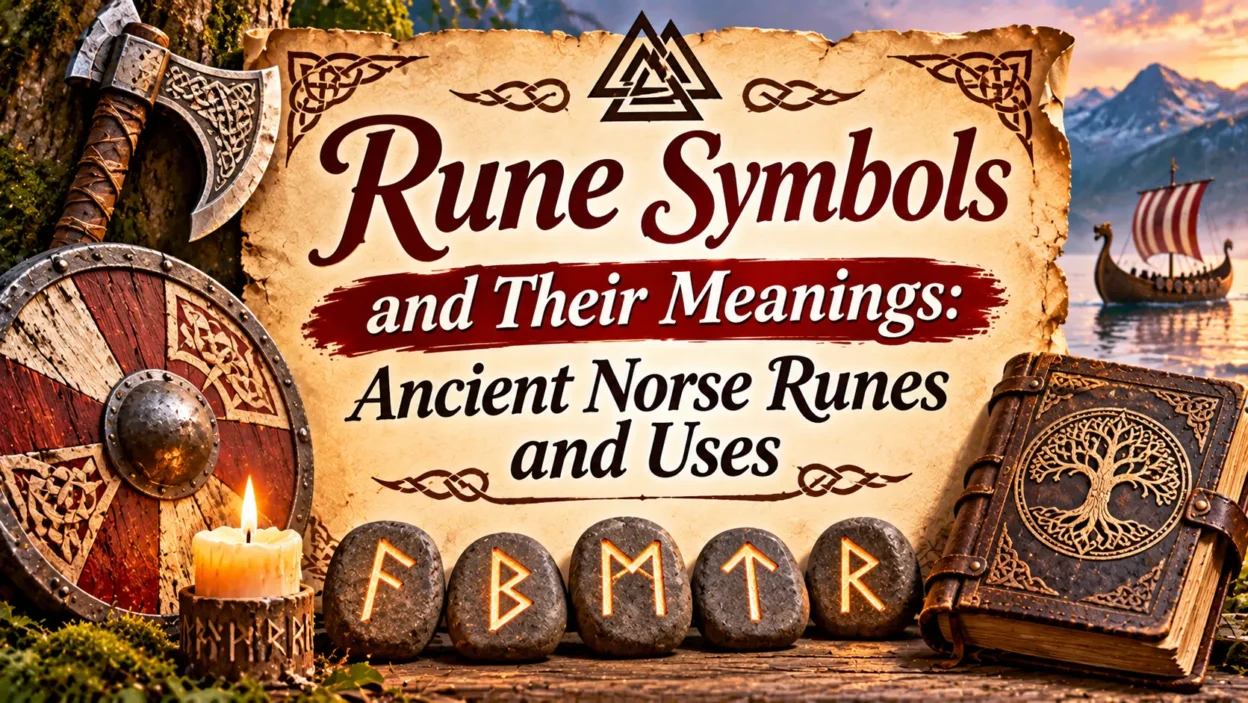
Rune symbols have fascinated people for centuries because of their connection to ancient writing systems, Norse mythology, spirituality, and Viking history. These mysterious-looking characters were more than decorative marks. Ancient Germanic communities used runes to write names, messages, inscriptions, and memorials on stones, weapons, jewelry, and other objects.
The rune symbols most people recognize come from the Elder Futhark, an ancient runic alphabet containing 24 characters. Each rune represents a sound, and many rune names are connected with ideas such as wealth, protection, strength, journeys, wisdom, and transformation. Today, people explore these symbols for historical research, tattoos, jewelry, artwork, and personal inspiration.
Whether you want to understand Viking runes, discover their traditional meanings, or learn about Norse rune symbolism, this guide explains the 24 Elder Futhark runes along with additional historical and cultural information.
What Are Rune Symbols? ᚠ
Rune symbols are characters from ancient writing systems used by Germanic-speaking peoples. The earliest widely recognized runic alphabet is the Elder Futhark, which contains 24 characters and was used approximately between the second and eighth centuries CE.
The word rune comes from an ancient Germanic word associated with mystery or secret knowledge. However, runes were not exclusively magical symbols. Their primary historical purpose was writing. People carved them into stone, wood, metal, and other materials to communicate information, identify ownership, commemorate individuals, and record messages.
Runes later developed spiritual and symbolic associations in different traditions. Modern interpretations often connect individual runes with concepts such as courage, protection, love, prosperity, and personal transformation. These interpretations should be distinguished from the historical evidence about how ancient people used them.
The 24 Elder Futhark Rune Symbols and Their Meanings ᚠ
The Elder Futhark is the oldest major runic alphabet, named after its first six characters: Fehu, Uruz, Thurisaz, Ansuz, Raidho, and Kenaz. Its 24 runes are traditionally arranged into three groups of eight, commonly called ættir.
Each rune has a historical name and sound value. The names also provide a basis for understanding their traditional associations.
First Aett: The First Eight Elder Futhark Runes 🛡️
The first group of eight runes is commonly called Freyr’s or Freyja’s ætt in modern rune traditions. Its characters include symbols associated with wealth, strength, communication, travel, and personal development.
1. Fehu (ᚠ) – Wealth and Prosperity
Fehu is associated with cattle and movable wealth. In ancient societies, livestock represented an important form of property and economic security.
- Meaning: Wealth, resources, prosperity, and abundance.
- Symbolism: Financial growth, possessions, and material security.
- Modern association: Success, opportunity, and prosperity.
2. Uruz (ᚢ) – Strength and Vitality
Uruz is traditionally associated with the aurochs, a powerful wild bovine that once lived across Europe and parts of Asia.
- Meaning: Strength, physical power, and vitality.
- Symbolism: Endurance, courage, and natural force.
- Modern association: Personal strength and resilience.
3. Thurisaz (ᚦ) – Protection and Challenges
Thurisaz is associated with a giant or powerful supernatural being in Germanic tradition. Its name is also connected with the thorn.
- Meaning: Threat, force, and challenge.
- Symbolism: Defense, obstacles, and powerful natural forces.
- Modern association: Boundaries, caution, and protection.
4. Ansuz (ᚨ) – Communication and Wisdom
Ansuz is associated with a deity or divine figure, often connected with Odin in later interpretations.
- Meaning: Communication, speech, and divine inspiration.
- Symbolism: Knowledge, language, and wisdom.
- Modern association: Learning, creativity, and guidance.
5. Raidho (ᚱ) – Travel and Journeys
Raidho is connected with riding, travel, and movement.
- Meaning: Journey, travel, and riding.
- Symbolism: Movement, direction, and progression.
- Modern association: Personal growth and life’s journey.
6. Kenaz (ᚲ) – Knowledge and Illumination
Kenaz is associated with a torch or flame, which provides light in darkness.
- Meaning: Torch, light, and illumination.
- Symbolism: Understanding, creativity, and discovery.
- Modern association: Inspiration and learning.
7. Gebo (ᚷ) – Gifts and Relationships
Gebo is associated with a gift or exchange. It can represent generosity and the importance of reciprocal relationships.
- Meaning: Gift and exchange.
- Symbolism: Partnership, generosity, and balance.
- Modern association: Friendship, love, and meaningful connections.
8. Wunjo (ᚹ) – Joy and Happiness
Wunjo is traditionally connected with joy and well-being.
- Meaning: Joy, pleasure, and happiness.
- Symbolism: Harmony, satisfaction, and belonging.
- Modern association: Positive relationships and emotional fulfillment.
Second Aett: The Next Eight Elder Futhark Runes ⚡
The second group contains runes associated with natural forces, hardship, transformation, and human experiences. In modern symbolic interpretations, these characters often represent patience, resilience, and change.
9. Hagalaz (ᚺ) – Disruption and Change
Hagalaz is associated with hail, a natural force that can damage crops and disrupt daily life.
- Meaning: Hail and natural disruption.
- Symbolism: Unexpected events, difficulty, and change.
- Modern association: Transformation through challenges.
10. Nauthiz (ᚾ) – Need and Necessity
Nauthiz represents need, necessity, and hardship.
- Meaning: Need, constraint, and necessity.
- Symbolism: Limitations, patience, and survival.
- Modern association: Discipline and perseverance.
11. Isa (ᛁ) – Stillness and Ice
Isa means ice and represents a frozen or motionless state.
- Meaning: Ice and stillness.
- Symbolism: Pause, restriction, and stability.
- Modern association: Reflection and patience.
12. Jera (ᛃ) – Harvest and Cycles
Jera is associated with the year and the seasonal harvest.
- Meaning: Year and harvest.
- Symbolism: Natural cycles, results, and seasonal change.
- Modern association: Rewards through patience and effort.
13. Eihwaz (ᛇ) – Yew and Endurance
Eihwaz is associated with the yew tree, which has strong connections with endurance and long life in European traditions.
- Meaning: Yew tree.
- Symbolism: Endurance, resilience, and continuity.
- Modern association: Strength during difficult periods.
14. Perthro (ᛈ) – Mystery and Uncertainty
Perthro has a debated historical meaning. Its name is not completely understood, so modern interpretations vary.
- Meaning: Uncertain or disputed.
- Symbolism: Mystery, chance, and the unknown in modern rune interpretations.
- Modern association: Unexpected possibilities and discovery.
15. Algiz (ᛉ) – Protection and Defense
Algiz is frequently interpreted in modern rune traditions as a protective symbol. Its historical name and original meaning are debated.
- Meaning: Historically uncertain.
- Symbolism: Protection and defense in modern interpretations.
- Modern association: Safety, awareness, and spiritual protection.
16. Sowilo (ᛊ) – Sun and Energy
Sowilo represents the sun and is associated with light and brightness.
- Meaning: Sun.
- Symbolism: Energy, warmth, and illumination.
- Modern association: Success, confidence, and vitality.
Third Aett: The Final Eight Elder Futhark Runes 🌿
The final group includes runes associated with human relationships, nature, inheritance, family, and the divine. Their traditional names provide insight into the everyday experiences and beliefs of ancient Germanic communities.
17. Tiwaz (ᛏ) – Justice and Courage
Tiwaz is named after Tiw or Tyr, a Germanic god associated with law, justice, and heroic courage.
- Meaning: Tyr and the god associated with the rune.
- Symbolism: Justice, honor, and sacrifice.
- Modern association: Leadership and determination.
18. Berkano (ᛒ) – Birth and Growth
Berkano is associated with the birch tree.
- Meaning: Birch.
- Symbolism: Growth, renewal, and new beginnings.
- Modern association: Motherhood, nurturing, and development.
19. Ehwaz (ᛖ) – Partnership and Movement
Ehwaz means horse and reflects the importance of horses in transportation and everyday life.
- Meaning: Horse.
- Symbolism: Movement, cooperation, and companionship.
- Modern association: Trust, teamwork, and progress.
20. Mannaz (ᛗ) – Humanity and Identity
Mannaz is associated with human beings and the human community.
- Meaning: Human or person.
- Symbolism: Identity, society, and relationships.
- Modern association: Self-awareness and cooperation.
21. Laguz (ᛚ) – Water and Flow
Laguz is associated with water, a vital element in nature and human life.
- Meaning: Water or a body of water.
- Symbolism: Flow, movement, and natural forces.
- Modern association: Intuition, adaptability, and emotional awareness.
22. Ingwaz (ᛜ) – Fertility and Potential
Ingwaz is associated with Ing, a Germanic divine figure.
- Meaning: Ing.
- Symbolism: Fertility, potential, and growth in modern interpretations.
- Modern association: Development and new opportunities.
23. Dagaz (ᛞ) – Day and Transformation
Dagaz means day and is connected with daylight.
- Meaning: Day.
- Symbolism: Light, brightness, and the transition from darkness.
- Modern association: Awakening and new beginnings.
24. Othala (ᛟ) – Heritage and Inheritance
Othala is associated with inherited property and ancestral land.
- Meaning: Inherited property or ancestral estate.
- Symbolism: Heritage, family, and belonging.
- Modern association: Roots, traditions, and family history.
Viking Rune Symbols and Their Meanings ⚔️
Viking-age people used runes for practical writing, memorial inscriptions, ownership marks, and other purposes. The Younger Futhark was the main runic writing system used during the Viking Age, rather than the older 24-character Elder Futhark.
The Younger Futhark contains 16 runes. It developed from earlier runic writing and was used extensively in Scandinavia during the Viking Age.
Some popular Viking-related runic symbols include:
- Fehu (ᚠ): Associated with wealth and cattle in the older Elder Futhark.
- Tiwaz (ᛏ): Connected with Tyr and often interpreted through courage and justice.
- Ansuz (ᚨ): Associated with divine figures and communication in Elder Futhark interpretations.
- Raidho (ᚱ): Connected with riding and travel.
- Othala (ᛟ): Associated with inherited property and ancestral land.
- Algiz (ᛉ): Commonly interpreted as a protection symbol in modern spiritual practices.
It is important to remember that the Elder Futhark and Younger Futhark are different alphabets. Many popular Viking-inspired designs combine historical runes with modern spiritual interpretations.
Norse Rune Symbols for Protection 🛡️
Protection is one of the most popular themes in modern rune symbolism. Certain runes are frequently selected for jewelry, tattoos, artwork, and personal spiritual practices because people associate them with strength, boundaries, and safety.
Here are some runes commonly connected with protection in modern interpretations:
- Algiz (ᛉ): Often used as a modern symbol of protection and defense.
- Thurisaz (ᚦ): Associated with powerful forces, boundaries, and challenges.
- Tiwaz (ᛏ): Represents courage, honor, and determination.
- Eihwaz (ᛇ): Associated with endurance and resilience.
- Uruz (ᚢ): Represents strength and physical vitality.
These meanings are popular in contemporary rune spirituality, but they should not be treated as proof that ancient Vikings used each rune as a magical protective charm.
Rune Symbols for Love and Relationships ❤️
Some runes have become popular symbols of love, friendship, commitment, and partnership. Their modern meanings often develop from the original names and traditional associations of the characters.
- Gebo (ᚷ): Represents gifts, exchange, and mutual relationships.
- Wunjo (ᚹ): Associated with joy, happiness, and harmony.
- Berkano (ᛒ): Connected with growth, nurturing, and new beginnings.
- Ehwaz (ᛖ): Represents partnership, cooperation, and trust.
- Ingwaz (ᛜ): Often associated with fertility and potential.
Gebo is particularly popular in modern relationship symbolism because its meaning connects with giving and receiving. However, no single rune has a universally established ancient meaning of romantic love.
Rune Symbols for Strength and Courage 💪
Strength and courage are common themes in modern interpretations of ancient runes. People often choose these characters for tattoos and personal artwork to represent determination, resilience, and the ability to overcome difficulties.
- Uruz (ᚢ): Represents physical power and vitality.
- Tiwaz (ᛏ): Associated with courage, justice, and honor.
- Eihwaz (ᛇ): Represents endurance and resilience.
- Thurisaz (ᚦ): Symbolizes powerful forces and challenges.
- Sowilo (ᛊ): Associated with the sun, brightness, and energy.
These runes can provide inspiration for designs representing personal strength, confidence, and determination.
Rune Symbols for Wisdom and Knowledge 📚
Wisdom and knowledge are also important themes in modern rune interpretations. Several rune names connect with communication, illumination, reflection, and human understanding.
- Ansuz (ᚨ): Associated with speech, communication, and divine inspiration.
- Kenaz (ᚲ): Represents a torch and illumination.
- Mannaz (ᛗ): Connected with humanity, identity, and society.
- Perthro (ᛈ): Often associated with mystery and the unknown in modern interpretations.
- Dagaz (ᛞ): Represents daylight and brightness.
Ansuz and Kenaz are particularly relevant to people exploring rune symbolism for education, creativity, communication, and personal development.
Rune Symbols for Wealth and Good Luck 🍀
Several runes are popularly connected with prosperity, opportunity, and positive outcomes. These associations make them common choices for modern rune-inspired jewelry and artwork.
- Fehu (ᚠ): Represents cattle and movable wealth.
- Jera (ᛃ): Represents the year and harvest.
- Wunjo (ᚹ): Associated with joy and well-being.
- Gebo (ᚷ): Represents gifts and exchange.
- Sowilo (ᛊ): Associated with the sun and brightness.
Fehu is especially recognizable because its traditional association with livestock connects it with wealth and material resources in ancient society.
Rune Symbols for Tattoos and Their Meanings 🖋️
Rune tattoos have become popular among people interested in Norse mythology, ancient history, personal symbolism, and minimalist designs. A single rune can create a simple tattoo, while combinations can produce more elaborate patterns.
Here are some popular choices and their commonly understood meanings:
| Rune | Modern symbolic association |
|---|---|
| Fehu (ᚠ) | Wealth and prosperity |
| Uruz (ᚢ) | Strength and vitality |
| Thurisaz (ᚦ) | Boundaries and powerful forces |
| Ansuz (ᚨ) | Wisdom and communication |
| Raidho (ᚱ) | Travel and life’s journey |
| Gebo (ᚷ) | Relationships and exchange |
| Wunjo (ᚹ) | Joy and harmony |
| Algiz (ᛉ) | Protection |
| Tiwaz (ᛏ) | Courage and justice |
| Othala (ᛟ) | Heritage and family |
Before choosing a rune tattoo, research its historical use and modern associations. Some runic characters and combinations have also been appropriated by extremist movements. Understanding the cultural context can help avoid unintended meanings.
What Is the Difference Between Elder Futhark and Younger Futhark? ᚱ
Elder Futhark and Younger Futhark are two different historical runic alphabets. They belong to the development of Germanic writing systems but were used during different periods.
The Elder Futhark contains 24 characters and was used approximately from the second to eighth centuries CE. The Younger Futhark contains 16 characters and became prominent in Scandinavia during the Viking Age.
| Feature | Elder Futhark | Younger Futhark |
|---|---|---|
| Number of runes | 24 | 16 |
| Historical period | Approximately 2nd–8th centuries CE | Approximately 8th–12th centuries CE |
| Main association | Early Germanic writing | Viking Age Scandinavia |
| Primary use | Inscriptions and writing | Inscriptions and writing |
| Character system | 24 distinct runes | 16 runes representing a wider range of sounds |
The Elder Futhark is especially popular in modern rune symbolism because its 24 characters have recognizable names and traditional associations. The Younger Futhark is particularly important for understanding actual Viking-Age inscriptions.
What Are Bind Runes? ᛟ
Bind runes are symbols created by combining two or more runic characters into a single design. Historically, people sometimes joined runes in inscriptions for practical or decorative reasons.
Modern artists and spiritual practitioners also create bind runes to represent personal intentions, names, or symbolic combinations. For example, someone might combine runes associated with strength and protection to create a personalized design.
However, not every modern bind rune has an ancient historical origin. Many are contemporary creations inspired by historical writing systems.
Are Rune Symbols Magical? ✨
Runes are often associated with magic and divination in modern popular culture, but their historical use was primarily as a writing system. Some historical sources connect runes with charms, inscriptions, and ritual practices, although the evidence does not support every modern claim about their supposed powers.
In Norse mythology, the god Odin is connected with the acquisition of runic knowledge. The Old Norse poem Hávamál describes Odin’s ordeal on the world tree in a passage associated with discovering the runes.
Modern spiritual traditions may use runes for meditation, reflection, or divination. These practices are contemporary interpretations and should be distinguished from what historians can establish about ancient runic traditions.
Frequently Asked Questions About Rune Symbols ❓
How many Elder Futhark rune symbols are there?
The Elder Futhark contains 24 runes. They are traditionally divided into three groups of eight, called ættir.
What is the most powerful Viking rune?
There is no historically established ranking of the most powerful runes. Uruz is commonly associated with strength, Tiwaz with courage and justice, and Algiz with protection in modern interpretations.
Which rune symbolizes protection?
Algiz (ᛉ) is one of the most popular modern symbols of protection. Its historical meaning is uncertain, so its protective association should be understood as a contemporary interpretation.
Which rune represents love?
Gebo (ᚷ) is often associated with relationships, gifts, and mutual exchange. Modern practitioners sometimes connect it with love and partnership.
Which rune represents wealth?
Fehu (ᚠ) represents cattle and movable wealth. It is commonly associated with prosperity and financial resources.
Which rune represents strength?
Uruz (ᚢ) is associated with the aurochs and commonly symbolizes physical strength, vitality, and endurance.
What is the Viking alphabet called?
The runic writing systems used by Norse and other Germanic peoples are generally called runic alphabets. Younger Futhark was the main writing system used in Scandinavia during the Viking Age.
Did Vikings use Elder Futhark?
The Elder Futhark was used before the Viking Age. During the Viking Age, Scandinavians primarily used Younger Futhark, which had 16 characters.
What does the word Futhark mean?
Futhark is the name given to a runic alphabet based on the sounds of its first six characters. The sequence begins with F, U, Th, A, R, and K.
Can runes be combined?
Yes. Bind runes combine two or more runic characters into one design. Historical and modern examples exist, although their purposes and meanings can differ.
Conclusion
Rune symbols offer a fascinating connection to ancient Germanic writing, Viking history, Norse mythology, and modern symbolic traditions. The 24 characters of the Elder Futhark represent sounds and have names connected with concepts such as wealth, strength, journeys, relationships, nature, and heritage.
From Fehu and Uruz to Algiz and Othala, each rune has a distinctive history and interpretation. While modern spirituality often gives runes additional meanings related to protection, love, luck, and personal transformation, understanding their historical origins makes their symbolism even more interesting.
Whether you are researching ancient alphabets, choosing a meaningful tattoo, or exploring Norse culture, learning about rune symbols is a useful starting point for discovering the history and evolution of these remarkable characters.
Jessica Morgan is a writer and content creator at Blesslume, dedicated to sharing meaningful blessings, heartfelt prayers, inspiring wishes, and uplifting messages. She is passionate about helping people find the right words to celebrate special moments, offer encouragement, and spread kindness. Through thoughtful and inspiring content, Jessica aims to bring hope, positivity, and connection to readers around the world.